
How to Plan a Corporate Wakesurf Outing on Lake Austin Without Pressuring Your Team
October 25, 2026 · By Jordan Miller
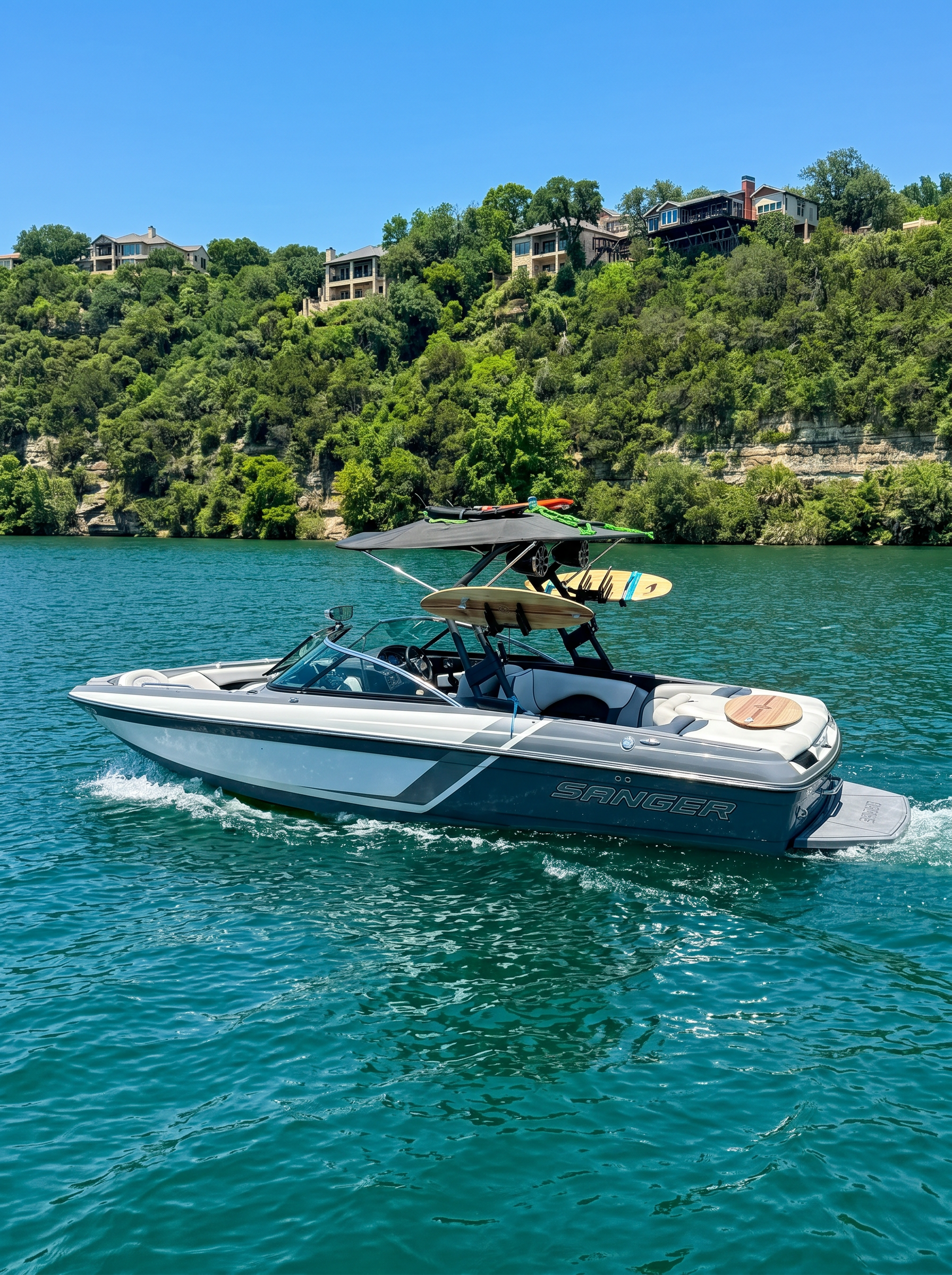
A successful corporate wakesurf outing does not require everyone to ride. It requires clear expectations, voluntary participation, and a plan that gives both surfers and non-surfers a comfortable place in the day.
That distinction matters when coworkers share a boat. A friendly invitation to try something new can feel very different when it comes from a manager. Someone may be excited to wakesurf, happy to watch, nervous around water, or unable to participate for reasons they would rather keep private.
Plan a corporate wakesurf outing on Lake Austin with optional riding, clear safety expectations, realistic logistics, and a budget that includes gratuity. The result should feel like a well-organized break from work, not a performance review with a surfboard.
This guide focuses on the organizer's decisions: choosing the right format, gathering useful information without overstepping, managing time on the water, and creating an event that does not reward risk-taking or punish someone for sitting out.
Start with the purpose of the outing, not the activity list
Before requesting a reservation, decide what you want the event to accomplish. A celebration after a project launch needs a different tone from a client-hosting afternoon or a gathering for colleagues who have never met in person.
Choose one primary purpose. Examples include thanking the team, giving remote coworkers time together, or celebrating a shared milestone. Keep that purpose separate from individual athletic participation.
If the goal is connection, someone who chats with coworkers from their seat is participating. If the goal is recognition, employees should not have to get in the water to receive it.
Write a simple event brief
A useful brief can fit into a few sentences:
- Purpose: A relaxed team celebration on Lake Austin.
- Format: A private captained lake day with optional wakesurfing.
- Participation: Riding is voluntary, and watching is welcome.
- Success: Everyone understands the plan and has a comfortable way to take part.
Share that brief with the person approving the event and the charter operator. It helps prevent a late change in expectations, such as turning a relaxed afternoon into an unofficial surfing contest.
Avoid promising that everyone will stand up, ride without the rope, or receive the same number of attempts. Learning, conditions, and individual comfort vary. The organizer can promise thoughtful planning, not a particular riding outcome.
Choose a private charter for a company-only event
If you want an outing limited to your invited group, confirm that you are booking a private charter rather than individual places in a shared session.
Texas Wakesurf Charters offers captained private wakesurf and lake-day charters on Lake Austin in Austin, Texas. Included are an expert captain and water sports instructor, fuel, top-tier water sports equipment, and a complimentary cooler with ice.
The public wake surf sessions are a different format: they cost $100 per person, have 5–8 people, and are not private. They should not be presented to coworkers as an exclusive company boat outing.
Review the available experiences, then describe the event you actually want. A surf-focused team may prioritize instruction and rider rotations. Another team may prefer a lake day with occasional surfing and more time simply enjoying the setting.
Confirm capacity before inviting the whole department
Do not infer passenger capacity from photos, seating arrangements, or the size of a previous outing. Ask for the permitted guest count for the specific reservation and confirm whether your expected attendance fits.
Review the vessel for context, but resolve capacity and boarding questions directly before sending a final invitation. A boat that looks spacious in a photograph is not permission to add an extra colleague at the dock.
If your group is too large for the available arrangement, ask what options are actually offered. Do not assume additional vessels, simultaneous departures, or transfers between boats are available.
Make participation genuinely optional
Saying “no pressure” once is not enough if every other part of the event celebrates only the people who surf. Optional participation needs to show up in the invitation, the manager's behavior, and the way the afternoon unfolds.
A useful invitation might say:
We are planning a private Lake Austin outing with optional wakesurfing. You are welcome to ride or enjoy the lake from the boat. No explanation is needed if you prefer not to surf. Please contact the organizer privately with any access or participation questions before we finalize the booking.
This is sample wording, not a description of a past event. Adapt it to match your company's attendance rules and the details you have confirmed.
Give people a private way to raise concerns
A public poll asking “Who is afraid of the water?” is unnecessary and can be embarrassing. Instead, offer a private contact or form where employees can indicate their preference without explaining why.
Useful response choices include:
- Interested in trying wakesurfing.
- Interested in riding, with previous experience.
- Planning to stay aboard and watch.
- Would like to discuss access or comfort needs privately.
- Not planning to attend.
Avoid asking employees to send diagnoses or detailed medical histories to the event organizer. If someone has a medical question about participation, encourage them to consult their clinician and discuss practical requirements with the operator as appropriate.
Keep managers out of the persuasion business
Managers can model enthusiasm without recruiting reluctant riders. “You are welcome to watch” is more useful than repeated encouragement after someone has declined.
Do not tie riding to team spirit, bravery, leadership, or commitment. Avoid public votes about who should go next. A person who initially expressed interest should also be free to change their mind after seeing the activity.
If attendance is expected rather than voluntary, work with your company's appropriate internal team on a comparable alternative for employees who cannot comfortably attend a boat outing. Riding being optional does not automatically make being aboard accessible to everyone.
Resolve boarding and comfort questions before booking
A private charter gives your group its own event setting, but it does not remove the physical realities of boarding and spending time on a boat.
Ask about the actual boarding location, walking route, steps, gaps, handholds, and any movement between the dock and vessel. Someone may be comfortable sitting aboard but unable to manage an uncertain boarding transfer.
Do not promise wheelchair access, accessible restrooms, a particular amount of shade, or an easy dock approach without confirmation. These details can determine whether a guest can attend at all.
Ask specific logistical questions
Bring the operator questions such as:
- What does the boarding process involve at the planned pickup location?
- What restroom arrangements should guests expect?
- What seating and shade are available on the vessel?
- Are there footwear or bag restrictions?
- Can the operator accommodate the practical assistance a guest needs?
- What should someone prone to motion sickness know before deciding to attend?
The goal is not to collect sensitive personal information. It is to replace vague assurances with concrete facts that guests can use to make their own decisions.
For motion sickness or medication concerns, leave treatment advice to a pharmacist or clinician. Do not distribute medication to coworkers or suggest that taking something is a condition of attendance.
Build a complete budget, including the captain's gratuity
Corporate budgets often fail at the approval stage because the organizer submits only the headline reservation amount. Include every known event expense before asking for authorization.
For Texas Wakesurf Charters, a 20% mandatory gratuity is due to the captain. Treat that as a required budget item, not a discretionary amount to decide after the trip.
Check current pricing and request the details for your reservation. Do not use the public session's per-person price as an estimate for a private corporate charter.
Separate included items from company expenses
The charter includes the captain and water sports instructor, fuel, water sports equipment, and a complimentary cooler with ice. That inclusion list does not mean every event expense is covered.
Your planning worksheet should account for:
- The confirmed private charter charge.
- The mandatory gratuity and its confirmed calculation basis.
- Any additional charges shown in the booking terms.
- Transportation and parking, if applicable.
- Food and beverages permitted by the operator.
- Any company-approved alternatives for employees not attending.
Ask how and when the gratuity should be paid so the employee hosting the event is not surprised at the dock. Confirm receipt and reimbursement requirements with your finance team beforehand.
Food delivery, transportation, decorations, and photography should not be assumed to be included. If you want any of those additions, first confirm what is allowed and who is responsible for arranging it.
Gather rider preferences without creating a competition
Once attendance is reasonably firm, ask how many guests want instruction and how many expect to stay aboard. This information helps shape the outing without requiring anyone to commit to riding.
For interested riders, a simple experience description is enough: never tried it, have tried getting up, can ride with the rope, or can ride without it. There is no need to rank coworkers or publish a skill chart.
Share the overall mix with the captain or instructor before the event. A group of first-time riders has different coaching needs from a group that already knows basic starts and controlled riding.
Use a flexible rotation
Agree on a broad rotation approach with the captain, then leave room for adjustment. Water conditions, fatigue, equipment changes, and rider readiness all affect how the session unfolds.
A fair approach usually includes these principles:
- Offer willing beginners a chance before confident riders take repeated turns.
- Let a rider pause or stop without having to justify the choice.
- Avoid guaranteeing a fixed number of attempts.
- Leave operational decisions and instructional pacing to the captain.
- Revisit the rotation if someone changes their participation preference.
Do not let the most experienced person become the unofficial instructor unless the crew requests their help. Multiple people calling advice from the boat can confuse a beginner and make it harder to hear the actual instruction.
Build the run of show around transitions
A corporate outing involves more than time spent riding. Arrival, boarding, orientation, equipment fitting, water entry, retrieval, and returning to the dock all take attention.
Instead of filling every minute with activities, plan an ordered sequence with room for those transitions. Confirm the charter duration and boarding expectations with the operator rather than treating a sample schedule as a promise.
Before arrival
Send one concise logistics message containing the confirmed meeting location, arrival instructions, parking or transportation details, what to bring, and the organizer's contact information.
Make it clear that the charter is on Lake Austin. Do not send guests a Lake Travis destination simply because their map search surfaced a different Austin-area marina. Use the operator's confirmed directions, with the Lake Austin guide as general background rather than a substitute for pickup instructions.
At boarding
Check attendance, store bags as directed, and let the captain lead the safety briefing. Save speeches and announcements until the crew has completed the essential orientation.
Guests should understand where to sit, how to move aboard when permitted, how rider communication works, and what to do when someone is in the water. Phones and side conversations can wait.
During the outing
Begin with the captain's recommended plan for conditions and the group's experience. Keep any company remarks brief, and do not deliver them while the crew is coaching or recovering a rider.
Allow the outing to have quiet stretches. Constant programming can make a small shared space feel more demanding than a normal workday.
Before returning
Let the captain manage the return and docking process. Collect loose personal items only when directed, not while everyone is moving around during a maneuver.
Save reimbursements, feedback forms, and event recaps for later. The dock is not the best place for a mandatory team debrief.
Set alcohol and safety expectations before departure
For a work event with optional water sports, the clearest rider expectation is straightforward: anyone participating in wakesurfing should remain sober. Do not encourage someone to use alcohol to overcome nerves.
Confirm the operator's beverage rules and your company's event policy before buying anything. A cooler with ice is included, but that does not establish what beverages or containers are permitted.
If alcohol is allowed for non-riding adults, keep it separate from the decision to surf, avoid drinking games, and arrange transportation that does not depend on an impaired guest driving home. Alcohol should never be the main activity for people who are not surfing.
Let the captain control water access
A coworker should not jump in to retrieve a dropped item, help a rider, or start an impromptu swim. Water entry, rider pickup, and any swimming opportunity must follow the captain's instructions.
Riders should use an appropriately fitted, U.S. Coast Guard-approved life jacket suitable for the activity, with fit and suitability checked with the instructor. A flotation device does not replace swimming ability or honest communication about comfort in the water.
The captain should also control equipment and boat setup. Guests should not adjust ballast, operate controls, handle tow connections, or change seating to influence the wave unless specifically directed.
Know when to stop
A rider who is exhausted, distressed, cold, overheated, or no longer able to follow instruction should stop and alert the crew. Do not turn another attempt into a group chant.
Headache, dizziness, nausea, and confusion deserve prompt attention aboard a boat. They can have several causes, including heat illness or carbon monoxide exposure. Alert the captain immediately rather than assuming someone is merely seasick. Suspected emergencies require emergency assistance.
Keep people away from exhaust areas and do not allow hanging on the swim platform while the engine is running. Safety guidance should come from the crew, not from a coworker's recollection of a different boat trip.
Give non-surfers a real place in the event
Guests who remain aboard do not need a substitute assignment. They can watch, talk, enjoy the scenery, or simply relax within the captain's seating and movement instructions.
Do not automatically make them photographers, food servers, or the people responsible for everyone else's bags. Those roles can turn “optional surfing” into an unequal event where some employees receive recreation and others provide support.
If someone volunteers to take pictures, that is fine, provided it does not interfere with safety duties or crew communication. A person taking photos is not a substitute for an assigned observer.
Keep music at a level that allows instruction and safety signals to be heard. Choose conversation-friendly moments for team interaction rather than competing with the instructor during a rider's start.
For guests who enjoy learning without riding, explain that watching the coaching can be part of the experience. They still should not be quizzed, teased, or recruited into the water afterward.
Agree on photo consent and company privacy
A work outing can produce images employees do not want on a company feed. Swimwear, falls, and awkward first attempts deserve the same privacy consideration as any other personal moment.
Ask separately about taking photos and publishing them. Permission to appear in an internal group chat is not necessarily permission for marketing use or a public social post.
Establish a simple rule before departure: no posting identifiable photos of coworkers without their approval. Avoid tagging people in real time unless they have agreed.
Do not organize a “best wipeout” reel or circulate a beginner's fall as office entertainment. Even a well-meant joke can make someone regret participating.
For client outings, keep confidential discussions off speakerphone and out of recorded video. A private charter describes the booking format, not a guarantee of confidentiality from everyone nearby or aboard.
Prepare for weather changes and absent guests
The captain must be able to adjust or stop activity when conditions require it. An event budget, executive attendance, or a long drive to the lake does not override that decision.
Read the applicable policies before booking. Confirm the cancellation, rescheduling, weather, late-arrival, and guest-count terms for your reservation rather than promising coworkers a refund or alternate date you have not verified.
Choose one company contact to communicate with the operator. Multiple guests sending separate weather questions can create conflicting information and unnecessary confusion.
Your internal fallback plan can be simple: identify who will notify attendees, how transportation changes will be handled, and whether there is a company-approved alternative activity. Do not describe that alternative as something the charter operator provides unless it has been confirmed.
Ask guests to report attendance changes directly to the organizer. Reconfirm the final headcount and avoid inviting replacements whose participation or access needs have not been considered.
Send a clear final brief
The final message should make the day easier, not repeat every planning conversation. Put the essential details in one place and point guests to the operator's FAQ for additional background.
Include:
- The confirmed Lake Austin meeting location and arrival instructions.
- The expected event window and transportation arrangements.
- A reminder that wakesurfing is optional.
- Confirmed clothing, footwear, and packing guidance.
- Beverage rules and the expectation that riders remain sober.
- A private contact for last-minute access or participation concerns.
- The photo-sharing agreement.
- How attendees will receive any weather-related update.
Then let the crew lead the on-water experience. The organizer's job is to remove uncertainty, protect voluntary participation, and keep company logistics from interrupting safe instruction.
Ready to plan a team day with optional wakesurfing? Book a charter and share your expected headcount, rider interests, and practical questions before finalizing the outing.
Frequently asked questions
Can a corporate Lake Austin outing include people who do not want to wakesurf?+
Yes. Texas Wakesurf Charters offers private wakesurf and lake-day charters, so your event can include guests who prefer to remain aboard. Make riding explicitly optional and confirm boarding, seating, and individual access needs before booking.
Are public wake surf sessions private company events?+
No. Public wake surf sessions cost $100 per person, have 5–8 people, and are not private. Choose a private charter if you want an outing limited to your invited company group.
What should a corporate charter budget include?+
Use the confirmed private charter price and include the 20% mandatory gratuity due to the captain. Also account for any applicable booking charges, transportation, parking, and permitted food or beverages. Confirm payment and receipt arrangements before the event.
What is included with Texas Wakesurf Charters?+
Included are an expert captain and water sports instructor, fuel, top-tier water sports equipment, and a complimentary cooler with ice. Confirm any additional event arrangements directly rather than assuming they are included.
How should an organizer handle coworkers who are nervous about riding?+
Provide a private way to discuss concerns, allow people to decline without explanation, and avoid repeated encouragement after they say no. Someone who initially wants to ride should remain free to change their mind.
Should coworkers drink alcohol before wakesurfing?+
Riders should remain sober. Confirm the operator's beverage rules and your company's event policy in advance, and never encourage someone to drink to overcome nerves. If alcohol is permitted for non-riding adults, plan safe transportation.
Ready to ride?