
Do You Need a Wetsuit for Wakesurfing on Lake Austin?
October 23, 2026 · By Jordan Miller
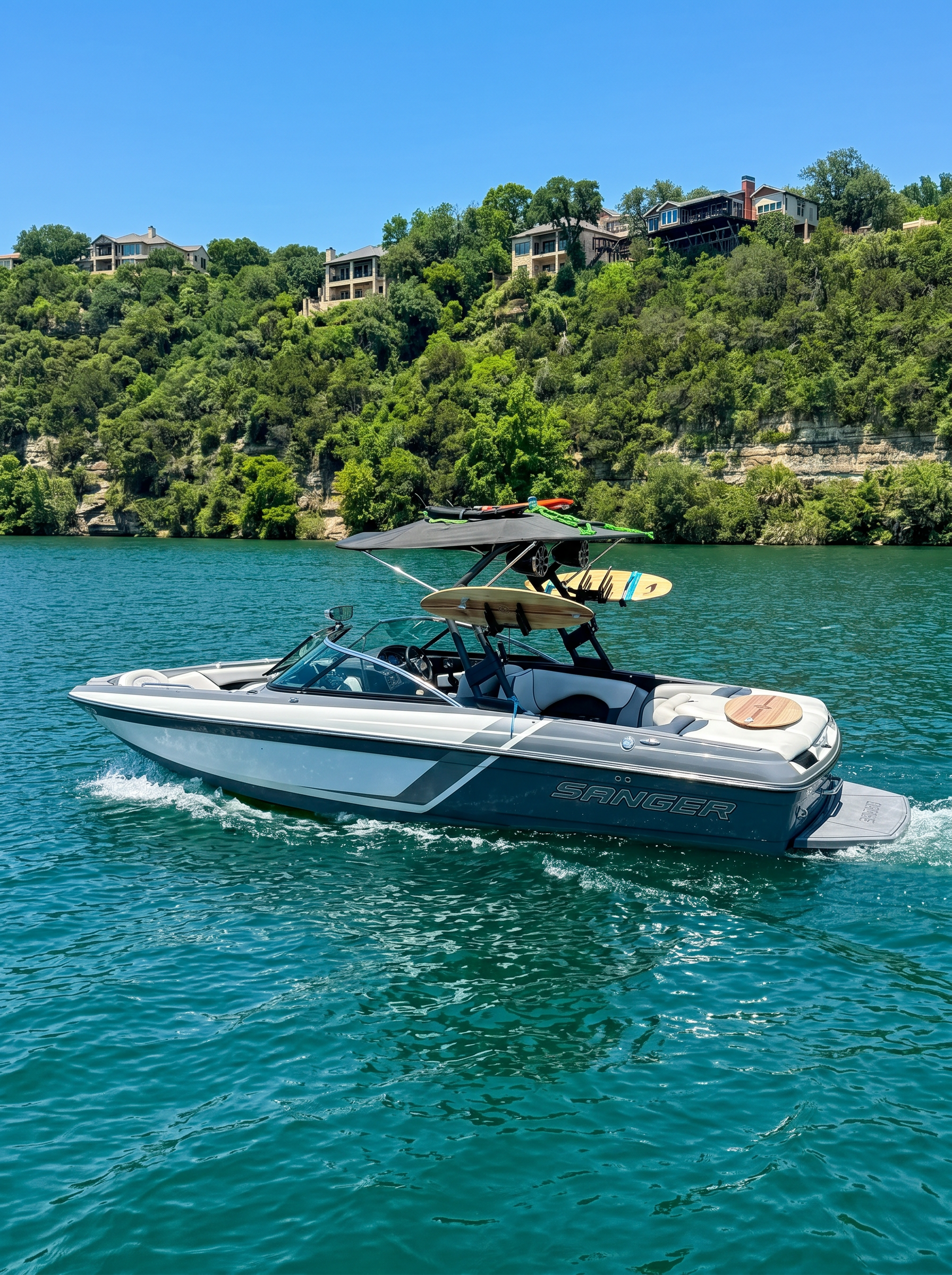
Whether you need a wetsuit for wakesurfing on Lake Austin depends on water temperature, weather, exposure time, and your tolerance for cold. A warm afternoon does not necessarily mean comfortable water, especially when you are floating through a lesson or sitting wet between turns.
A wetsuit slows heat loss, but it does not make cold water harmless. Choose thermal protection around the water you will enter, not just the air temperature at the dock.
This guide explains wetsuit thickness, fit, layering, and the warning signs that should end a session. For location and trip-planning context, see the Lake Austin guide.
What does a wakesurfing wetsuit actually do?
A wetsuit is a close-fitting garment, usually made from neoprene, that reduces heat loss in water. The insulating material does most of the work. A small amount of water can enter, but a properly fitted suit limits the continual exchange of that water with colder water outside.
A loose suit allows repeated flushing through the neck, wrists, ankles, or zipper. That can make a thick suit feel surprisingly cold. A painfully tight suit is not a solution either, because it can restrict breathing and movement.
Wakesurfing creates several kinds of exposure:
- Floating while preparing for a start.
- Repeated immersion during falls.
- Riding with spray and wind against the body.
- Sitting in moving air while wet after a turn.
Beginners may spend more time immersed than experienced riders. Someone taking short rides can therefore need more thermal protection than someone riding continuously.
A wetsuit is not a substitute for a properly fitted, U.S. Coast Guard-approved life jacket appropriate for the activity. Its added buoyancy does not make it an approved flotation device.
Why Lake Austin weather alone is not enough
Lake Austin is a managed river reservoir. Water conditions can vary with season, location, depth, and water movement associated with dam operations. A general Austin weather forecast cannot tell you the temperature where your group will actually enter the water.
Do not assume Lake Austin and Lake Travis will have identical water temperatures on the same day. Nearby lakes can feel different because their depth, circulation, and operating conditions differ.
Before choosing a suit, ask about the current water temperature in the planned riding area. A recent measurement is more useful than a seasonal average or a report from a different lake.
Then consider the forecast during the entire outing, not just departure. Clouds, wind, or a cooler return trip can change how comfortable a wet rider feels. Check with the captain about current conditions and whether the planned session is appropriate for your group.
How wetsuit thickness ratings work
Wetsuit thickness is usually stated in millimeters. A rating such as 3/2 generally means thicker material through the torso and thinner material in areas where flexibility matters, such as the arms and legs. Exact panel layouts vary by manufacturer.
Thickness is only one part of warmth. Coverage, seam construction, zipper design, material condition, and fit also matter.
| Suit option | What it covers | Main benefit | Important limitation |
|---|---|---|---|
| Wetsuit top | Torso and sometimes arms | Some insulation with easy movement | Leaves much of the body exposed |
| Spring suit or shorty | Torso with shorter arms or legs | More coverage than a top | Exposed limbs still lose heat |
| 3/2 full suit | Torso, arms, and legs | Full coverage with relatively flexible panels | May be insufficient for colder water or prolonged immersion |
| 4/3 full suit | Torso, arms, and legs | More insulation than a comparable 3/2 suit | Can feel more restrictive if poorly fitted |
| Thicker full suit with accessories | Full-body coverage, potentially including head, hands, and feet | Greater protection for colder conditions | Requires careful selection and does not eliminate cold-water risk |
These are product categories, not temperature guarantees. Use the specific manufacturer's water-temperature guidance as a starting point, then account for your exposure and cold sensitivity.
A rash guard is primarily a sun and abrasion garment. An ordinary rash guard does not provide the insulation of a neoprene wetsuit, even if it has long sleeves.
Step by step: choose thermal protection before the trip
Step 1: Check the water temperature
Ask for a recent reading relevant to the planned riding area. If reliable information is unavailable, acknowledge that uncertainty rather than assuming the water will feel warm.
For substantially cold conditions, a thicker suit alone is not a complete safety plan. The captain must also consider supervision, recovery, weather, and whether the activity should proceed.
Step 2: Estimate immersion and waiting time
Think about the whole session. A first-time rider may need repeated starts and coaching while floating. A rider practicing a new skill may fall frequently. Both situations can increase heat loss.
Time between turns matters too. A wet rider sitting in the breeze may keep cooling even after leaving the water.
Step 3: Consider the individual rider
Cold tolerance varies. Children and people who chill easily may need more conservative plans, closer monitoring, and shorter exposure. Medical conditions and some medications can also affect temperature regulation or the response to cold.
If you have a condition that could make cold-water immersion risky, ask a qualified healthcare professional before participating. Do not use another guest's comfort as proof that your own clothing is adequate.
Step 4: Match coverage and thickness to the conditions
Compare the measured water temperature with the suit manufacturer's recommendations. Favor adequate coverage and a sound fit rather than choosing solely by the largest thickness number.
If conditions are near the colder end of a suit's suggested range, discuss additional protection or a different session plan. Shortening or skipping the water portion may be safer than trying to compensate with clothing alone.
Step 5: Plan how to warm up afterward
Bring a towel, dry clothing, and an appropriate outer layer for the forecast. Keep them dry until needed.
Decide where riders will change and how wet equipment will be stored. Do not count on sunshine or a hot dock to provide reliable rewarming.
How to check wetsuit fit before boarding
Try the suit on before the outing when possible. Manufacturer sizing charts are helpful, but body proportions can make two suits with the same labeled size fit differently.
Use this practical check:
- Pull the suit fully into place at the legs, hips, and torso before judging the shoulders.
- Check for large pockets of loose material around the lower back, underarms, or crotch.
- Take a full breath. Chest or neck pressure should not interfere with normal breathing.
- Bend your knees, squat gently, and reach your arms forward as if holding a surf rope.
- Check that cuffs and the neck sit close without causing pain, numbness, or choking pressure.
- Put on the life jacket you will actually wear and check its fit over the suit.
The life jacket should remain secure rather than riding up toward your ears when checked according to its fitting instructions. Extra neoprene bulk is not a reason to leave straps loose.
Inspect the suit for damaged seams, substantial tears, and faulty closures. Follow the manufacturer's fastening instructions, and tuck zipper pulls or cords into their intended retainers.
Should you wear booties, gloves, or a hood?
Accessories can improve comfort in colder water, but they also change how equipment feels.
Neoprene booties
Booties insulate the feet and may provide some protection from minor abrasion. Their soles can change your grip and sensitivity on the board's traction pad.
Ask the instructor whether your booties are suitable for the board. Avoid loose footwear that can twist or slip. Do not assume ordinary water shoes provide meaningful cold-water insulation.
Neoprene gloves
Gloves reduce hand exposure, but bulky or poorly fitted gloves can make a rope handle harder to manage. Check that you can grip and release the handle easily before entering the water.
Never compensate for poor grip by wrapping the rope around your hand or wrist.
Neoprene hood
A hood adds coverage for colder conditions. It can also change how clearly you hear instructions, so confirm that communication remains effective.
If a session seems to require extensive cold-water equipment, discuss suitability with the operator rather than treating accessories as automatic permission to ride.
Recognize when cold exposure should end the session
Cold water can trigger an immediate involuntary gasp and rapid breathing. This initial response is different from hypothermia, which involves a dangerous drop in core body temperature over time. Both deserve attention.
Tell the captain immediately if breathing feels uncontrolled or if you feel distressed after entering the water. Do not start a tow until you are comfortable, communicating clearly, and ready.
| Warning sign | Practical response |
|---|---|
| Persistent shivering or increasing discomfort | End the turn and begin a supervised exit and warming process |
| Numb hands or difficulty holding and releasing the handle | Stop riding rather than attempting another start |
| Unusual clumsiness, weakness, or trouble following instructions | Alert the captain and remove the person from exposure |
| Confusion, slurred speech, marked drowsiness, or abnormal breathing | Treat as a medical emergency and contact emergency services |
Do not wait for a rider to become severely cold before stopping. The absence of shivering does not prove that a visibly impaired person is recovering.
Once safely aboard, shelter the person from wind and help them get dry and insulated. Someone with suspected significant hypothermia needs gentle handling and prompt medical assessment. Alcohol is not a warming treatment.
Wetsuit planning for a captained Lake Austin charter
Texas Wakesurf Charters offers captained private wakesurf and lake-day charters on Lake Austin. Included are an expert captain and water sports instructor, fuel, top-tier water sports equipment, and a complimentary cooler with ice.
Do not assume that included water sports equipment means every wetsuit style and size is available. Ask about thermal equipment before booking, including whether you should bring your own suit and whether the planned conditions suit your group's experience.
Useful questions include:
- What are the current water conditions in the riding area?
- Is a wetsuit recommended for this outing?
- Is suitable thermal equipment available in each rider's size?
- Can the group adjust its water time if someone gets cold?
Review pricing when planning the outing. A mandatory 20% gratuity is due to the captain. Consult the booking terms and policies for applicable trip conditions rather than assuming weather-related changes are guaranteed.
Ready to plan your water time? Share your group's experience and thermal-equipment questions when you book a charter.
Frequently asked questions
Do I need a wetsuit on Lake Austin if the air is warm?+
Possibly. Water temperature, wind, immersion time, and personal cold tolerance matter more than air temperature alone. Ask about current conditions in the planned riding area before choosing thermal protection.
Is a 3/2 wetsuit enough for wakesurfing?+
It depends on the water temperature, suit construction, fit, and duration of exposure. Use the specific manufacturer's temperature guidance as a starting point, then discuss the conditions with the captain.
Can I wear a rash guard instead of a wetsuit?+
An ordinary rash guard provides sun and abrasion protection but does not offer the insulation of a neoprene wetsuit. It is not a substitute when conditions call for thermal protection.
Do I still need a life jacket while wearing a wetsuit?+
Yes. Wear a properly fitted, U.S. Coast Guard-approved life jacket appropriate for wakesurfing. A wetsuit is not an approved flotation device, and the jacket's fit should be checked over the suit.
Are wetsuits included with a Texas Wakesurf Charters booking?+
Top-tier water sports equipment is included, but you should confirm wetsuit availability and sizing directly before the outing. Do not assume that every thermal-equipment option is available.
Ready to ride?