
Do You Need Wax on a Wakesurf Board? Traction Pads and Slippery Decks Explained
October 21, 2026 · By Jordan Miller
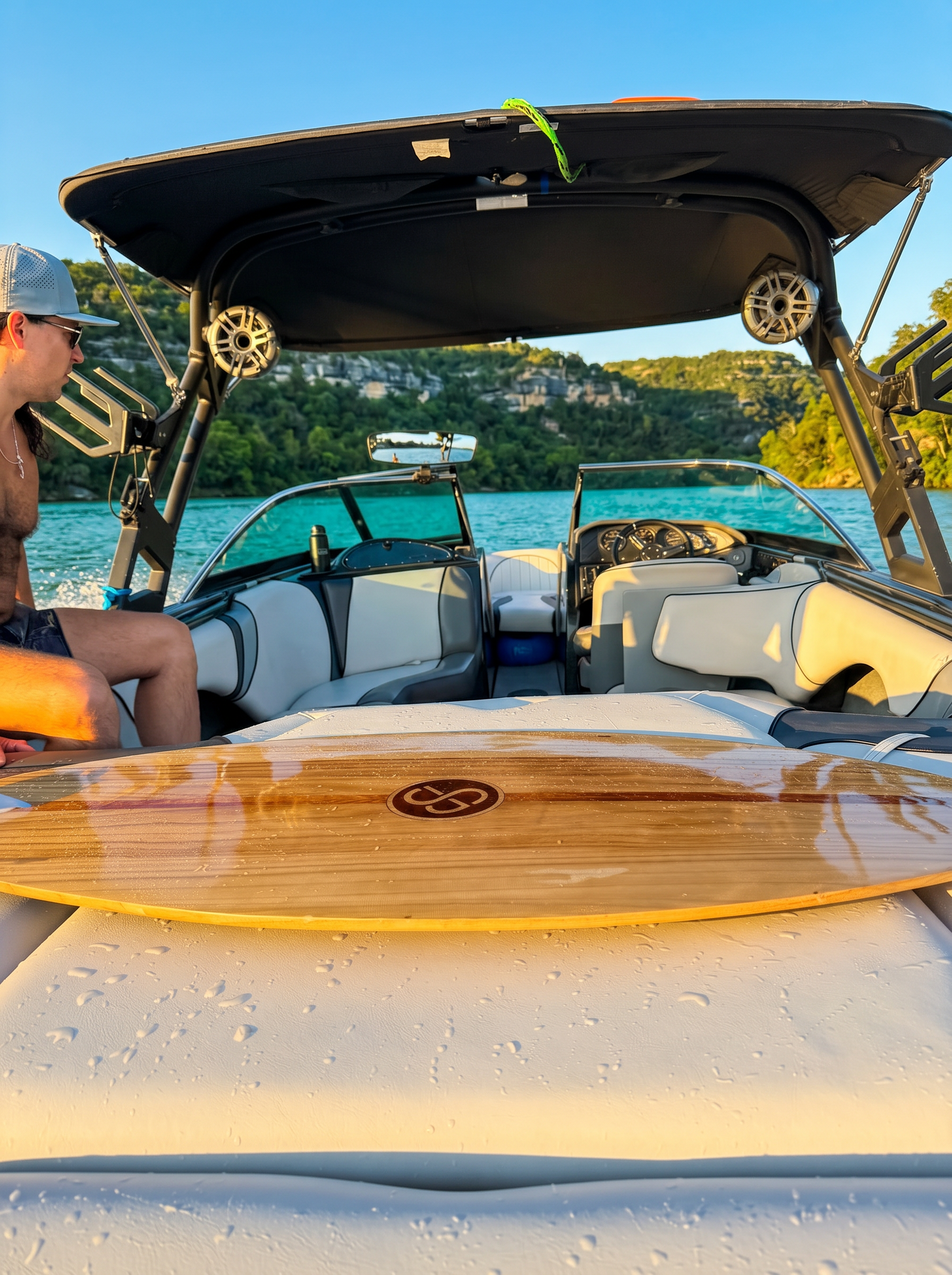
A wakesurf board does not automatically need wax. The right choice depends on its deck surface, existing traction pads, and the board manufacturer's instructions. Many wakesurf boards have foam traction pads that provide grip without wax. Other boards use a rear pad with a waxed front-foot area, while some rely on another factory-applied grip surface.
Before adding wax, identify the board's intended standing surface. A slippery deck may need cleaning, a traction-pad repair, different foot placement, or compatible surf wax.
This guide explains how to tell the difference, how to prepare a deck that actually needs wax, and when slipping is a reason to stop riding rather than add more grip.
What provides grip on a wakesurf board?
Wakesurf traction is the contact between your feet and the board's deck. It helps you maintain your stance as the board accelerates, turns, and moves over uneven water.
There are three common approaches to deck grip.
Foam traction pads
Traction pads are textured foam sections bonded to the deck. Many are made from EVA foam. Their grooves, raised patterns, or brushed surfaces help wet feet grip the board.
A board may have separate front and rear pads or a larger padded standing area. Some rear pads include an arch support or a raised tail kick. Those features provide tactile reference points, but they do not mean every rider should stand directly on the raised sections.
Pads normally work without wax. Unless the manufacturer specifically directs otherwise, do not treat a foam pad as a surface that needs routine waxing.
Surf wax on an exposed deck
Surf wax creates a textured, grippy layer on a compatible board surface. It is different from polishing wax, automotive wax, and products intended to make a surface slick.
Some wakesurf boards have a rear traction pad and an exposed front-foot area intended for wax. Others may use wax across more of the standing area.
An exposed glossy surface is not proof that wax belongs there. Check the board's instructions before applying it.
Factory-applied grip surfaces
Some boards use an integrated textured surface or another proprietary traction system. Soft-top boards also vary in construction and grip requirements.
Do not assume these surfaces need wax, and do not assume they are all wax-free. Follow the instructions for the specific board model and surface material.
How can you tell whether your board needs wax?
Start with the board manufacturer's guidance, then inspect the deck. For a rental or charter board, ask the instructor before applying anything.
| Deck configuration | Typical approach | What to check first |
|---|---|---|
| Front and rear foam traction pads | Ride without wax on the pads | Cleanliness, wear, and whether both feet fit on the padded areas |
| Rear pad with an exposed front-foot area | Wax may be needed on the exposed area | Whether the manufacturer specifies wax or another traction solution |
| Bare hard deck | Compatible surf wax or approved pads may be needed | Deck material and the intended traction setup |
| Factory-textured deck | Use the factory surface as directed | Whether wax is permitted or recommended |
| Soft-top deck | Follow model-specific instructions | Whether its surface is designed to work without added wax |
If you cannot identify the surface or find the instructions, do not experiment with solvents, adhesive pads, or household products. Ask the board manufacturer or equipment provider.
A dry-foot test on shore is not enough to confirm grip. Traction must work when the deck and feet are wet, but that does not mean you should stand on an unsupported board on land to test it.
Step by step: diagnose a slippery wakesurf deck
Slipping does not always mean the board lacks wax. Use this sequence before changing equipment.
Step 1: Identify where the foot slipped
Determine whether the foot was on foam, a waxed section, a factory grip surface, or an unprepared part of the deck.
If your front foot repeatedly lands ahead of the front pad, adding wax to the rear pad will not solve the problem. An instructor can check whether your stance matches the intended standing area or whether a different board would fit you better.
Step 2: Check for contamination
Sunscreen, skin oils, spilled drinks, and residue from unsuitable cleaning products can reduce traction. Sunscreen remains important for sun protection, but oily hands and fresh product should not be rubbed onto the deck.
Clean the affected area using the board or pad manufacturer's approved method. Rinse away cleaning residue as directed. Avoid adding a product marketed for shine or surface protection unless it is explicitly approved for the standing area.
Step 3: Inspect pads and wax
Look for:
- Pad edges lifting away from the board.
- Torn, crumbling, or heavily worn foam.
- Dirt embedded in a wax layer.
- Smooth or smeared wax instead of a useful texture.
- Exposed deck where a foot regularly lands.
- Cracks, soft spots, or other possible board damage.
A lifting pad is an attachment problem, not a wax problem. Stop using the board if the pad shifts or the deck appears structurally damaged.
Step 4: Separate grip problems from technique problems
A rider can lose contact with a grippy deck by standing rigidly, moving abruptly, or unloading the board over chop. More wax will not correct every balance issue.
Ask the instructor to observe the next attempt. A relaxed stance, controlled movements, and appropriate foot placement may solve a problem that initially feels like slippery equipment.
Step 5: Change one thing at a time
Clean the deck, correct the foot position, or refresh the wax as appropriate. Then reassess under the captain's and instructor's direction.
Changing boards, stance, and traction products simultaneously makes it harder to identify the actual cause.
How do you choose wax for a wakesurf board?
Use surf wax intended for compatible board decks. Do not substitute candle wax, furniture polish, automotive wax, or ski and snowboard glide wax.
Match the wax to the water temperature
Surf wax is commonly sold in water-temperature ranges. Follow the range printed on the product rather than choosing solely by the air temperature or season.
Wax formulated for colder water can become excessively soft in warmer conditions. A harder warm-water formulation may not provide the intended feel in colder water. Product ranges differ, so labels are more useful than a universal temperature rule.
For a Lake Austin outing, ask about current conditions rather than assuming hot weather means a particular water temperature. Air and water temperatures are not interchangeable. The Lake Austin guide provides broader planning context for a day on the lake.
Check whether the product needs a basecoat
Some wax systems use a firmer basecoat beneath a temperature-appropriate topcoat. Others have different application instructions.
Use a basecoat when the wax manufacturer recommends one. It is not a universal requirement for every product or deck.
Step by step: apply wax to a compatible bare deck
Only follow these steps after confirming that the exposed deck is intended for surf wax.
Step 1: Prepare a clean, dry surface
Place the board securely on suitable padded support, out of direct sun. Clean the intended area using an approved method and let it dry.
Remove contaminated or unsuitable old wax when necessary. Use manufacturer-approved removal methods. Do not use aggressive solvents, metal scrapers, heat guns, or hot water without explicit approval for that board.
Step 2: Identify the standing area
Apply wax where your feet are expected to contact the exposed deck. Do not spread it across the rails, bottom, fins, or carry surfaces unnecessarily.
On a board with a rear pad, the front-foot area may be the only section that needs wax. Leave existing pads alone unless their manufacturer says otherwise.
Step 3: Build texture gradually
Apply any required basecoat according to its instructions. Add the appropriate topcoat with light, repeated passes to create texture rather than a thick, smooth smear.
Heavy pressure and excessive application are not shortcuts to better grip. Follow the wax maker's guidance for the finished surface.
Step 4: Recheck before riding
Confirm that the wax covers the intended foot-contact area and that no loose pad or board damage was hidden during preparation.
Keep the board out of prolonged direct heat while waiting to ride. Hot storage conditions can soften wax and make it transfer onto seats, bags, or other equipment.
Should you add traction pads instead of wax?
Pads can be useful when the board manufacturer approves them and their layout suits the rider. They provide a defined standing surface and avoid routine wax application in those areas.
However, installing pads is more involved than sticking foam over a slippery spot. Wax residue, incompatible cleaners, moisture, or poor surface preparation can prevent the adhesive from bonding properly.
Before installation:
- Confirm compatibility with the board's deck material and finish.
- Check that the pad layout leaves room for the intended stance.
- Remove wax and residue using approved methods.
- Follow the adhesive's application conditions and waiting period before water use.
- Check whether the modification affects warranty coverage.
Do not glue down a failing pad with an unspecified household adhesive. Repair or replacement should follow the board and pad manufacturers' directions.
What should charter guests do about board traction?
On a guided outing, tell the instructor if a board feels slippery or your feet keep landing outside the traction area. Do not apply your own wax, cleaner, or adhesive to shared equipment without permission.
Texas Wakesurf Charters offers captained private wakesurf and lake-day charters on Lake Austin. An expert captain and water sports instructor, fuel, top-tier water sports equipment, and a complimentary cooler with ice are included. Guests can discuss equipment and riding needs before getting on the water rather than buying wax speculatively.
Review the available experiences and current pricing when planning. A mandatory 20% gratuity is due to the captain.
The practical rule is simple: use the traction system the board was designed for, keep it in sound condition, and investigate repeated slipping before adding products. To practice with equipment guidance on Lake Austin, book a charter.
Frequently asked questions
Do all wakesurf boards need wax?+
No. Many wakesurf boards use foam traction pads that work without wax. Other boards have exposed standing areas intended for surf wax or a factory grip surface with its own requirements. Follow the specific board manufacturer's instructions.
Can you put surf wax on wakesurf traction pads?+
Foam traction pads normally do not need wax. Unless the manufacturer specifically recommends it, address slipping by checking cleanliness, pad wear, attachment, and foot placement instead.
Why is my wakesurf board slippery even though it has traction pads?+
Possible causes include sunscreen or cleaning residue, worn foam, a loose pad, or feet landing outside the padded area. Technique can also cause a rider to lose contact with the deck. Have an instructor help identify the cause before adding products.
Should wakesurf wax match the air temperature or water temperature?+
Choose surf wax using the manufacturer's water-temperature range. Air temperature alone is not a reliable guide to the correct formulation.
Can I install a traction pad over old surf wax?+
Do not install an adhesive pad over wax residue. Confirm deck compatibility, prepare the surface using approved methods, and follow the pad manufacturer's application instructions and waiting period before water use.
Should I bring wax for a wakesurf charter?+
Ask the equipment provider first. Texas Wakesurf Charters includes water sports equipment, and guests should tell the instructor about traction concerns rather than apply products to shared boards without permission.
Ready to ride?