
How to Fall Safely While Wakesurfing: Rider Recovery and Boat Pickup
October 17, 2026 · By Jordan Miller
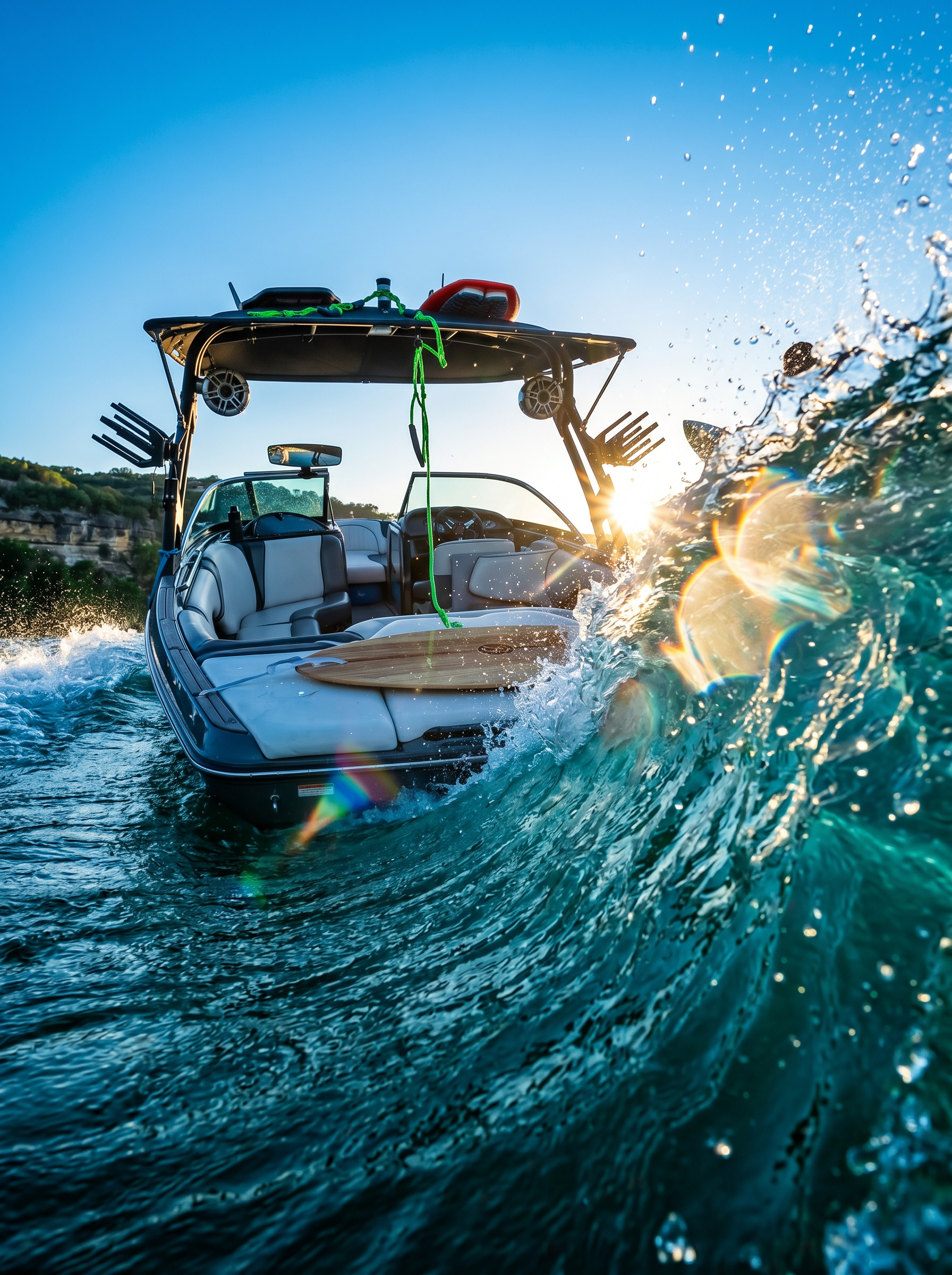
A good wakesurf lesson includes what happens after you fall
Most first-time wakesurfers picture the standing-up part: feet on the board, knees bent, and a wave pushing them across Lake Austin. Fewer picture the moments after a fall, when the board drifts away and the boat begins its recovery approach.
Those moments deserve just as much attention.
Knowing how to fall, signal, and wait for pickup helps you avoid rushed decisions. It also makes the session less intimidating. A fall stops feeling like an unexpected interruption and starts feeling like a reset you know how to handle.
This guide focuses on that reset: what to do as you lose balance, how to manage yourself and your equipment in the water, and how to reconnect with the boat without creating a new hazard.
These are general principles, not a substitute for an on-board safety briefing. Your captain’s instructions, the boat’s layout, traffic, weather, and your condition determine the right recovery procedure on a particular ride.
Before your first ride, agree on the recovery plan
A safe recovery starts before anyone enters the water. You should not have to guess what a hand signal means or where to swim while you are floating behind the boat.
At Texas Wakesurf Charters, private Lake Austin wakesurf and lake-day charters include an expert captain and water sports instructor. Use that instruction time to ask about falling and pickup, not just how to stand up.
Confirm the signals you will use
Ask the captain to demonstrate the signals for:
- “I’m okay.”
- “I need help.”
- “I want to stop.”
- Any direction the captain may give during a pickup.
Do not assume a gesture you learned elsewhere means the same thing to this crew. Agree on visible signals and who will watch for them.
A signal is also not a promise that you must continue. You can be uninjured and still want a break. Tell the crew if you are tired, anxious, cold, or simply finished with your turn.
Learn the boat’s boarding procedure
Before entering the water, identify the designated entry and boarding location. Ask where to wait while the captain positions the boat and what instruction means you may approach.
The key distinction is between being near the boat and being cleared to board. Do not swim toward the stern, platform, or ladder just because the boat appears to have stopped.
The captain must establish a safe boarding situation. The engine should be shut off before you approach the stern or platform and board, with explicit clearance from the captain. A boat in neutral is not the same as a boat with its engine off.
Make sure your flotation stays in place
Wear an appropriately approved, properly fitted life jacket suitable for the activity. It should remain secure during a fall rather than riding up around your face.
If it feels loose, interferes with breathing, or shifts substantially when you enter the water, tell the instructor before starting. Your life jacket is part of the recovery plan, not just something you wear to begin the ride.
For broader preparation, review the knowledge base and bring any equipment questions to your instructor.
When you lose balance, prioritize separation from the board
Wakesurf falls can happen quickly. A rail catches, your weight moves too far back, or your upper body twists while your feet stay planted. The goal is not to perform a perfect-looking fall. It is to avoid adding force or contact to a loss of balance.
Stop trying to save an unrecoverable ride
Small balance corrections are part of learning. But once you are clearly falling, reaching desperately for the board or lunging back toward the wave can turn a simple splash into contact with the deck, edge, or fins.
Let the ride end.
When possible, direct your fall into clear water away from the board and away from the boat’s path. Do not make a forceful jump or try to leap over the board. Your instructor can explain sensible fall directions for your stance and the way the board is moving.
Avoid reaching a stiff arm toward the board to catch yourself. There is no solid, predictable surface to brace against, and the board may tilt or rebound.
Do not dive headfirst
A wakesurf fall is not a diving opportunity. Do not deliberately lead with your head or attempt a stylish dismount.
Water depth, submerged hazards, board position, and the force of impact can all be difficult to judge in the moment. Let your flotation support you after entry rather than trying to turn the fall into a dive or underwater swim.
If your head is near the board as you fall or surface, protect it with your arms as practical without trapping yourself in the rope.
Do not stand up after a fall
Even if the shoreline looks close, do not assume you can touch bottom safely. Depth changes, rocks, debris, and other underwater hazards may not be visible.
Stay supported by your life jacket and follow the recovery instructions. The boat’s pickup procedure, not walking toward shore, is the normal reset.
If you are holding the rope, release it as you fall
The rope adds another moving object to a fall. Trying to keep hold after losing control can drag you, twist your body, or bring the handle into an awkward position.
Let go of the handle when you fall. Do not try to finish the fall while keeping the rope tucked against your body.
Keep the line away from your body
Never wrap the rope around your wrist, arm, hand, leg, or torso. Do not put your hand through the handle opening as a way to secure your grip.
While waiting for another start:
- Keep loose rope away from your legs and feet.
- Avoid floating inside a loop of line.
- Do not coil excess rope around your body.
- Tell the crew if the line is caught or tangled.
- Wait for instructions before repositioning the handle.
A slack rope can become tensioned quickly. The captain and crew need to know if it is not clear before another start.
Do not chase the handle
If the handle lands out of reach, stay calm and let the crew manage the reset. Swimming after a drifting handle can separate you from the expected pickup position or put you across the line.
Likewise, do not throw the handle toward someone’s face or toward the captain. Follow the instructor’s method for passing or releasing it.
If a line becomes wrapped around you, alert the crew immediately and do not signal that you are ready to start. Keep the situation stopped until the line is fully clear.
After you surface: breathe, look, and signal
The first few seconds after a fall can feel busy. There may be splash in your face, water in your ears, and a board moving nearby.
Give yourself a simple order of operations.
1. Establish your breathing
Let your life jacket support you and get your airway clear. You do not need to immediately retrieve equipment or wave enthusiastically.
If you are coughing, struggling to breathe, or having trouble keeping your face clear of the water, signal for help as soon as you can. The priority is you, not the board.
2. Locate the board and boat
Look for the board without lunging toward it. Boards can drift, rotate, or move back toward you after a fall.
Locate the charter boat as well, but do not begin swimming toward it on your own. The captain may need room to position for pickup, account for other traffic, or keep the boat clear of the rope.
3. Give the agreed signal
If you are okay, use the signal established during the briefing. If you need help, use that signal or call out clearly.
Do not signal “okay” simply because you do not want to slow down the group. If something hurts, you feel dizzy, or you are unusually winded, say so.
4. Wait for the next instruction
Once you have communicated, remain visible and follow the crew’s directions. Avoid changing position repeatedly or swimming after drifting gear.
An orderly pause is useful. It gives the captain a more predictable rider position and gives you time to decide whether you want another attempt.
Stay visible without turning recovery into a race
Lake Austin is a shared boating environment. Your charter crew manages the recovery, but you should understand why unnecessary swimming makes that task harder.
A person in the water is less conspicuous than a boat. Glare, waves, distance, and other traffic can complicate visibility. The crew should maintain a lookout and track the rider throughout the recovery.
Your role is to stay with the agreed procedure and avoid unexpected movements.
Do not swim after distant equipment
If your board has drifted beyond easy reach, tell the crew and let them direct its recovery. The same applies to a hat, sunglasses, or anything else that falls into the water.
Equipment can be replaced. A rider swimming away from the expected pickup area creates a more difficult situation.
If the board is already close and the captain instructs you to hold it, handle it carefully and keep the fins away from your body. Do not lift it overhead, shove it toward the boat, or use it as a reason to leave your position.
Keep listening even after the boat slows
A boat slowing down does not mean the pickup is complete. The captain may still be maneuvering or waiting for another vessel to pass.
Listen for instructions rather than interpreting engine sound or boat movement as permission to swim. If you cannot hear, use the agreed communication method and wait for clarification.
For more local trip context, the Lake Austin guide is a useful place to begin planning, but conditions on the day still govern the captain’s decisions.
Treat the boat pickup as its own safety step
The ride and the pickup are separate tasks. Finishing one does not automatically make the other safe.
The biggest mistake is rushing the last few feet because the platform looks close and familiar.
Wait for clearance before approaching
Stay away from the boat’s underside and do not swim beneath a platform. Keep clear of the propeller area even when the boat appears stationary.
Wait until the captain has shut off the engine and explicitly directed you to approach the designated boarding point. Do not assume another passenger waving you over is equivalent to the captain’s clearance.
Follow instructions about the board and rope. You may be asked to leave equipment for the crew rather than trying to carry everything while climbing aboard.
Keep clear of exhaust areas
Do not linger at the stern near exhaust outlets or under the swim platform. Boat exhaust can contain carbon monoxide, which cannot be reliably detected by smell.
Headache, dizziness, nausea, weakness, or confusion during a boat outing warrant attention. Tell the captain immediately rather than assuming you are simply tired or seasick.
If someone collapses, is confused, or has trouble breathing, the crew should initiate an emergency response and seek urgent medical help. Do not resume riding while unexplained symptoms remain.
Board slowly and keep fingers clear
Use the designated handholds and boarding route. Keep fingers away from gaps where equipment or moving parts could pinch them.
Once aboard, move to a safe seat as directed. Do not stand on the platform to celebrate while the captain prepares to move again.
If you want to understand the boat before your trip, see the vessel information, then confirm the actual boarding procedure during your briefing.
Decide whether you need another attempt or a break
Not every fall needs analysis, and not every fall should lead immediately to another start.
A quick check-in helps separate an ordinary reset from a situation that needs rest or attention.
An ordinary reset
You surfaced comfortably, feel normal, have no pain, and understand the next instruction. The crew confirms the equipment is clear, and you genuinely want another attempt.
In that situation, keep the coaching simple. One useful adjustment is usually easier to apply than several corrections at once.
A reason to pause
Take a break if you are:
- Breathing harder than expected and not recovering comfortably.
- Struggling to hold your starting position.
- Feeling cold, overheated, shaky, or unusually fatigued.
- Getting frustrated enough to ignore instructions.
- Repeatedly missing or misunderstanding signals.
- Experiencing pain or equipment discomfort.
A break is not a failed session. It is a chance to recover before fatigue changes your decisions.
A reason to stop and seek assessment
A significant impact, suspected head or neck injury, persistent breathing difficulty, chest pain, confusion, or fainting should end the riding attempt and prompt appropriate medical assessment. Severe or worsening symptoms require emergency help.
After a hit to the head, do not return to riding if a concussion is suspected. Tell the captain about symptoms even if they develop after you are back on the boat.
Avoid letting the group’s enthusiasm make that decision for you.
What passengers should do when someone falls
A calm boat helps create a calm recovery. Friends and family can support the process without taking over the captain’s job.
Let one clear voice give instructions
Several people shouting “swim here,” “grab the board,” and “you’re fine” can confuse a rider who is still catching their breath.
Let the captain and instructor direct the recovery. If the captain assigns someone to observe the rider, that person should maintain attention rather than switching to a phone or camera.
Other passengers should remain seated or positioned as instructed and avoid crowding one side of the boat.
Do not jump in to help without direction
An impulsive rescue attempt can create a second person who needs assistance. Tell the captain immediately if the rider seems distressed, then follow the emergency instructions.
Do not throw random equipment toward the rider. If the captain calls for flotation or other assistance, use the designated equipment as directed.
Make stopping socially easy
The most helpful thing a group can say may be, “You can take a break.”
Avoid daring someone to repeat a painful fall or pressuring them to finish on a successful ride. Children and adults alike should be able to end a turn without having to defend the choice.
For birthdays, bachelorette outings, and corporate lake days, establish that expectation before the first rider enters the water.
Use the reset to improve your next ride
Once the safety check is complete, a fall can provide useful information. Keep the discussion brief and specific.
Instead of asking, “Why am I bad at this?” ask the instructor:
- “Was my weight moving too far forward or back?”
- “Did I straighten my legs before the fall?”
- “Was I pulling against the rope?”
- “What is the one thing I should change next time?”
The goal is a usable cue, not a complete replay of every movement.
If the same fall keeps happening, the instructor may adjust your setup, coaching approach, or the task you are practicing. Do not independently change boat settings or attempt a more aggressive movement to compensate.
A successful session can include learning to stop calmly, release the rope reliably, and communicate clearly, even before your rides become longer.
Plan a Lake Austin charter with instruction built in
If you are booking for new riders, ask how the safety briefing, in-water communication, and recovery procedure will work. Those details are more useful than promises that nobody will fall.
Texas Wakesurf Charters offers captained private wakesurf and lake-day charters on Lake Austin in Austin, Texas. Included are an expert captain and water sports instructor, fuel, top-tier water sports equipment, and a complimentary cooler with ice.
Review pricing when planning your group budget. A mandatory 20% gratuity is due to the captain, so account for it rather than treating gratuity as optional.
Public “wake surf sessions” are a separate option: $100 per person with 5–8 people, and they are not private. If your group wants an outing reserved for your party, choose a private charter rather than assuming a public session provides exclusive use.
Explore the available experiences, review the policies, and check the FAQ for general planning questions. Before boarding, tell the crew about swimming confidence, relevant physical limitations, and any concerns about entering or exiting the water.
The simplest recovery routine to remember
You do not need to memorize every possible fall. Remember the basic sequence:
- Let the ride end: release the handle and avoid lunging back onto the board.
- Surface and breathe: let your life jacket support you.
- Look and signal: locate the board and boat, then communicate your condition.
- Wait for direction: do not chase equipment or swim toward a maneuvering boat.
- Reset or stop: continue only when you and the crew are ready.
- Board with clearance: approach the designated boarding point only after the engine is off and the captain directs you.
Practiced consistently, that routine makes the pauses between rides feel more manageable. You can focus on learning because you know what happens when a ride ends.
Ready to learn with a captain and instructor on Lake Austin? Book a charter and make a clear recovery plan part of your first briefing.
Frequently asked questions
What should I do when I start falling off a wakesurf board?+
Release the rope handle if you are holding it, avoid lunging back onto the board, and aim for clear water away from the board when possible. Do not dive headfirst or try to catch yourself on the board with a stiff arm. Follow the falling guidance given by your instructor.
Should I swim after my wakesurf board after a fall?+
Do not chase a board that has drifted out of easy reach. Establish your breathing, signal your condition, and wait for the captain’s instructions. If the board is nearby, handle it only as directed and keep its fins away from your body.
When is it safe to swim back to the boat?+
Wait for explicit clearance from the captain. Before you approach the stern or swim platform to board, the engine should be shut off and the captain should direct you to the designated boarding point. Neutral alone is not a safe boarding clearance.
What if the wakesurf rope gets wrapped around me?+
Alert the crew immediately and do not signal that you are ready for another start. Keep the situation stopped until the rope is fully clear. Never intentionally wrap the line around your hand, wrist, arm, leg, or torso.
Should I keep wakesurfing after hitting my head?+
Stop riding and tell the captain about the impact and any symptoms. Do not return to riding if a concussion is suspected. Confusion, fainting, severe or worsening symptoms, or suspected neck injury require urgent medical attention.
Does a Texas Wakesurf Charters private charter include instruction?+
Yes. Private Lake Austin charters include an expert captain and water sports instructor, fuel, top-tier water sports equipment, and a complimentary cooler with ice. A mandatory 20% gratuity is due to the captain.
Ready to ride?