
How Do You Set Wakesurf Ballast Without Overloading the Boat?
October 19, 2026 · By Jordan Miller
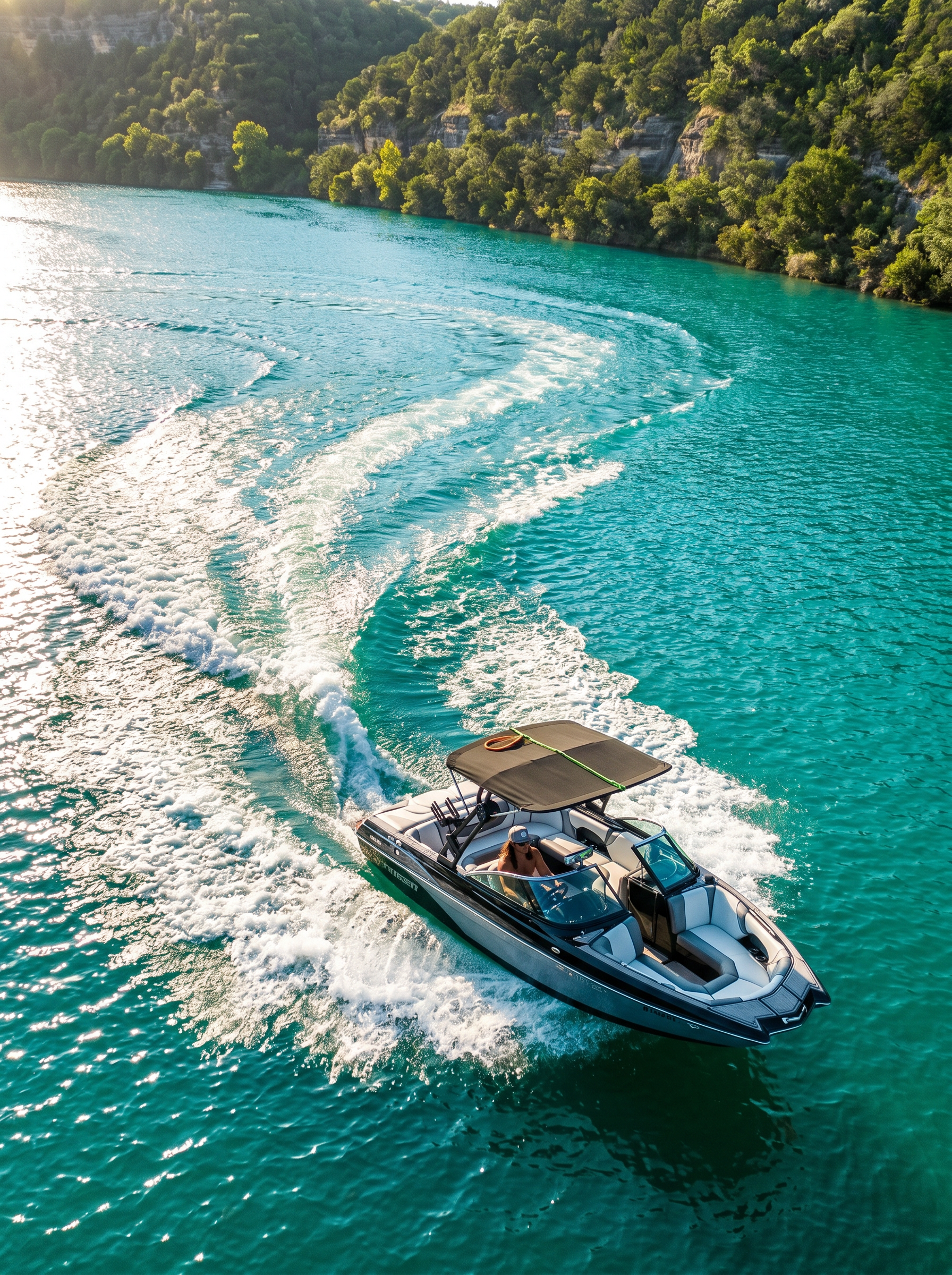
Setting wakesurf ballast means balancing wave shape with the boat's approved operating limits. The goal is a usable wave, predictable handling, and enough clearance above the water, not the heaviest possible boat.
A useful wakesurf wave depends on more than adding weight. Start with the boat's limits, then adjust ballast, passenger placement, speed, and surf controls. There is no universal ballast percentage that works for every hull, passenger group, or riding condition.
This guide explains a safe adjustment process for a wakesurf-capable boat. It is not permission to surf behind an unsuitable boat or to exceed manufacturer limits. On a captained charter, ballast and boat controls belong to the captain, not the passengers.
What does wakesurf ballast do?
Ballast is weight carried to change how a boat sits in the water. In wakesurf boats, it commonly takes the form of water held in built-in tanks or manufacturer-approved ballast bags.
Adding ballast increases displacement: the boat must move more water to support its total weight. Where that weight sits also affects the boat's running attitude and the wave it produces.
Ballast works alongside the hull, speed, passengers, and any installed surf-control system. More ballast does not automatically create a cleaner or easier wave.
Terms worth understanding
| Term | Practical meaning |
|---|---|
| Ballast | Weight used to influence displacement and boat attitude |
| Trim | The boat's fore-and-aft attitude, including whether the bow rides higher or lower |
| List | A sideways lean toward port or starboard |
| Freeboard | The distance between the waterline and the relevant edge of the hull or deck |
| Surf side | The side of the wake on which the rider surfs |
| The usable area of the wave where a rider can maintain speed without rope tension | |
| Wash | Broken, foamy water that can interrupt the usable wave face |
Built-in ballast percentages indicate the system's reported fill level. They do not independently prove that the boat is within its loading limits or that every tank contains the expected amount of water.
Start with the boat's loading instructions
Before adjusting ballast, read the owner's manual for the exact boat and its ballast system. Use the capacity information supplied for that vessel, including any capacity plate or loading labels present.
Do not assume that installed ballast can always be filled completely with every seat occupied. How ballast, passengers, and gear interact with loading limits depends on the manufacturer's instructions.
Check these items before departure:
- Maximum permitted persons and applicable weight limits.
- Restrictions on ballast use with different passenger loads.
- Approved ballast bags, tanks, pumps, and connections.
- Instructions for surf tabs, gates, plates, or other wave-shaping devices.
- Seating restrictions while underway.
- Any required reduction in loading for conditions or operating mode.
If the documentation does not clearly explain how ballast counts toward permitted loading, ask the manufacturer or an authorized service provider before adding weight. Do not create a capacity calculation from assumptions.
Passengers and equipment affect the setup
People, coolers, boards, and other carried items all contribute weight. Passenger placement can also change the wave, even when ballast settings remain unchanged.
A saved preset from a lightly loaded outing may not be appropriate for a larger group. Reassess the setup whenever the passenger load changes.
Loose dense weights are especially problematic: they cannot be pumped out, can shift if unsecured, and remain aboard during transport. Avoid improvised ballast. Use only configurations permitted for the boat, with weight properly secured.
How weight distribution changes the wave
The following tendencies are useful for diagnosis, but they are not universal rules. Hull design and surf hardware can change the result.
| Adjustment | Common effect | What to watch for |
|---|---|---|
| More aft weight | May produce a taller, steeper wave | Excessive bow rise, reduced visibility, or low stern clearance |
| More forward weight | May lengthen the usable face or reduce bow rise | Low bow clearance and greater vulnerability to incoming wakes |
| More weight on one side | Changes list and the wave on each side | Excessive heel, reduced clearance, or unsuitable handling |
| More total ballast | Increases displacement | Loading limits, sluggish response, or difficulty maintaining speed |
| Moving a passenger | Changes local weight distribution | Unsafe seating or movement while underway |
Some older setups rely heavily on deliberate list. Many modern surf systems are designed to create a wave with more balanced loading. Follow the vessel's instructions rather than copying another boat's arrangement.
Never use passengers sitting on gunwales, the swim platform, or other prohibited locations as a wave-adjustment technique.
Step-by-step ballast setup
Step 1: Check conditions before choosing a preset
Assess wind, boat traffic, available depth, route, and room for rider recovery. A setup that feels manageable on quiet water may be unsuitable when repeated wakes cross the course.
Depth can change wave shape. If the wave deteriorates in a shallower area, adding ballast is not a dependable fix. Move to suitable water while respecting navigation rules, local restrictions, and safe distances.
On Lake Austin, route planning matters alongside boat setup. Use the Lake Austin guide for planning context, then rely on current conditions, posted restrictions, and the captain's judgment on the day.
Step 2: Inspect the ballast system
Before filling, check accessible bags, hoses, fittings, and compartments according to the manual. Look for leaks, disconnected fittings, pinched hoses, and anything that could obstruct a bag as it expands.
Keep required equipment accessible. Ballast bags should not block access to safety gear, emergency controls, or service points that must remain available.
Unexpected bilge-pump activity or water accumulating outside the ballast system needs investigation. Do not treat it as a normal consequence of filling tanks.
Step 3: Establish a conservative baseline
Begin with the manufacturer's recommended surf configuration for the actual passenger load. If the instructions offer multiple settings, choose an appropriate starting point rather than automatically selecting maximum ballast.
Seat passengers in approved locations and secure carried equipment. Set the intended surf side using the installed controls as directed by the manufacturer.
Presets are starting points, not safety checks. Confirm that the boat is loaded appropriately before relying on one.
Step 4: Check handling before towing
With everyone seated and no rider in the water, assess the boat's response in clear water. Watch visibility, steering, acceleration, running attitude, and clearance above the water.
If the bow obstructs the operator's view, the boat takes water aboard, or handling is abnormal, stop the setup process. Reduce loading or correct the distribution within approved limits.
A visually impressive wave is not worth compromised control.
Step 5: Evaluate the wave at a steady approved speed
Use a speed suitable for the boat, rider, and conditions within the manufacturer's operating guidance. Let the boat settle into steady travel before evaluating the wave.
Look for a reasonably clean face and a usable pocket. The instructor should also watch the rider: difficulty staying with the wave can come from technique or board suitability, not just ballast.
Avoid using increasingly heavy loading to compensate for a rider who is still learning speed control.
Step 6: Change one variable at a time
Adjust ballast, speed, or surf-control settings separately. Follow the manufacturer's procedure for when and how adjustments can be made.
Observe the result before making another change. If several controls change together, it becomes difficult to tell what helped.
For passenger relocation, bring the boat to a safe stop and have the captain direct the move. Keep passengers in approved seats and do not ask anyone to stand or lean over the side to improve the wave.
Step 7: Record settings with their context
A useful setup note includes more than tank percentages. Record passenger load and seating, surf side, speed, surf-control position, and relevant conditions.
Treat that record as a future reference, not a configuration that is automatically safe on the next trip.
Troubleshooting without simply adding weight
| Problem | Possible contributors | Practical first response |
|---|---|---|
| Foamy or broken wave face | Surf-control position, uneven loading, speed, or crossing wakes | Verify the baseline and evaluate on a clear, steady course |
| Tall wave with a short pocket | Aft-heavy trim or control settings | Review approved fore-and-aft distribution before adding weight |
| Rider repeatedly drops behind | Technique, board fit, speed, or wave shape | Have the instructor assess the rider and setup together |
| Wave changes during a run | Passenger movement, turns, depth, traffic, or speed variation | Stabilize seating and compare conditions along the route |
| Boat struggles to hold speed | Excessive load or a mechanical issue | Reduce ballast within the operating instructions; investigate persistent problems |
| Bow or stern takes water aboard | Insufficient clearance, poor distribution, or unsuitable conditions | Stop towing and address the safety issue immediately |
A wave that works on one side may need different approved settings on the other. That does not justify exceeding loading limits or forcing an extreme list.
When should you drain ballast?
Reduce or drain ballast as directed by the manufacturer when conditions deteriorate, the passenger load increases, or handling becomes less predictable. Reassess before a longer transit rather than assuming the surf setup is appropriate for every part of the outing.
Stop towing if there is unexplained flooding, a system fault, or compromised visibility. Deal with the operational problem before trying to restore the wave.
Before trailering, follow the boat manufacturer's draining instructions and applicable Texas requirements for draining water and preventing the spread of invasive species. Ballast water adds transport weight and can carry organisms between water bodies. Check current Texas Parks and Wildlife requirements before moving a boat between lakes.
What charter guests need to know
On a captained trip, guests should tell the instructor what they experience: a short pocket, difficulty keeping pace, or an unstable wave face. The captain can decide whether the appropriate response is coaching, a board change, a setup adjustment, or a different route.
Texas Wakesurf Charters offers captained private wakesurf and lake-day charters on Lake Austin in Austin, Texas. Included are an expert captain and water sports instructor, fuel, top-tier water sports equipment, and a complimentary cooler with ice. A mandatory 20% gratuity is due to the captain.
Review the vessel information and pricing when planning your outing. Guests do not need to arrive with a ballast recipe; the useful information is the group's experience level and what each rider wants to practice.
Ready to leave boat setup to the captain? Book a charter for a Lake Austin wakesurf outing.
Frequently asked questions
Should wakesurf ballast always be completely full?+
No. Appropriate fill levels depend on the boat's loading instructions, passenger and gear weight, conditions, and surf system. Full ballast is not automatically safe or necessary.
Does adding more ballast always make a better wakesurf wave?+
No. More ballast increases displacement, but wave quality also depends on weight distribution, speed, hull design, surf controls, and water depth. Excess loading can compromise visibility, clearance, and handling.
Should ballast be heavier on the surf side?+
It depends on the boat. Some setups use deliberate list, while many surf-control systems are designed for more balanced loading. Follow the exact vessel's instructions rather than copying another boat.
Do passengers affect wakesurf ballast settings?+
Yes. Passenger weight and seating change the boat's load and distribution. Reassess the setup when the group changes, and keep everyone in approved seating locations.
Can shallow water change a wakesurf wave?+
Yes. Depth can affect wave shape. If the wave changes in shallower water, adding ballast is not a dependable solution. The captain should evaluate the route and move to suitable water when safe and permitted.
Who adjusts ballast on a captained wakesurf charter?+
The captain controls ballast and boat settings. Guests should describe what they experience to the instructor rather than operating controls or moving passengers to reshape the wave.
Ready to ride?