
Lake Austin Wakesurfing in Summer: A Heat-Smart Charter Plan
October 20, 2026 · By Jordan Miller
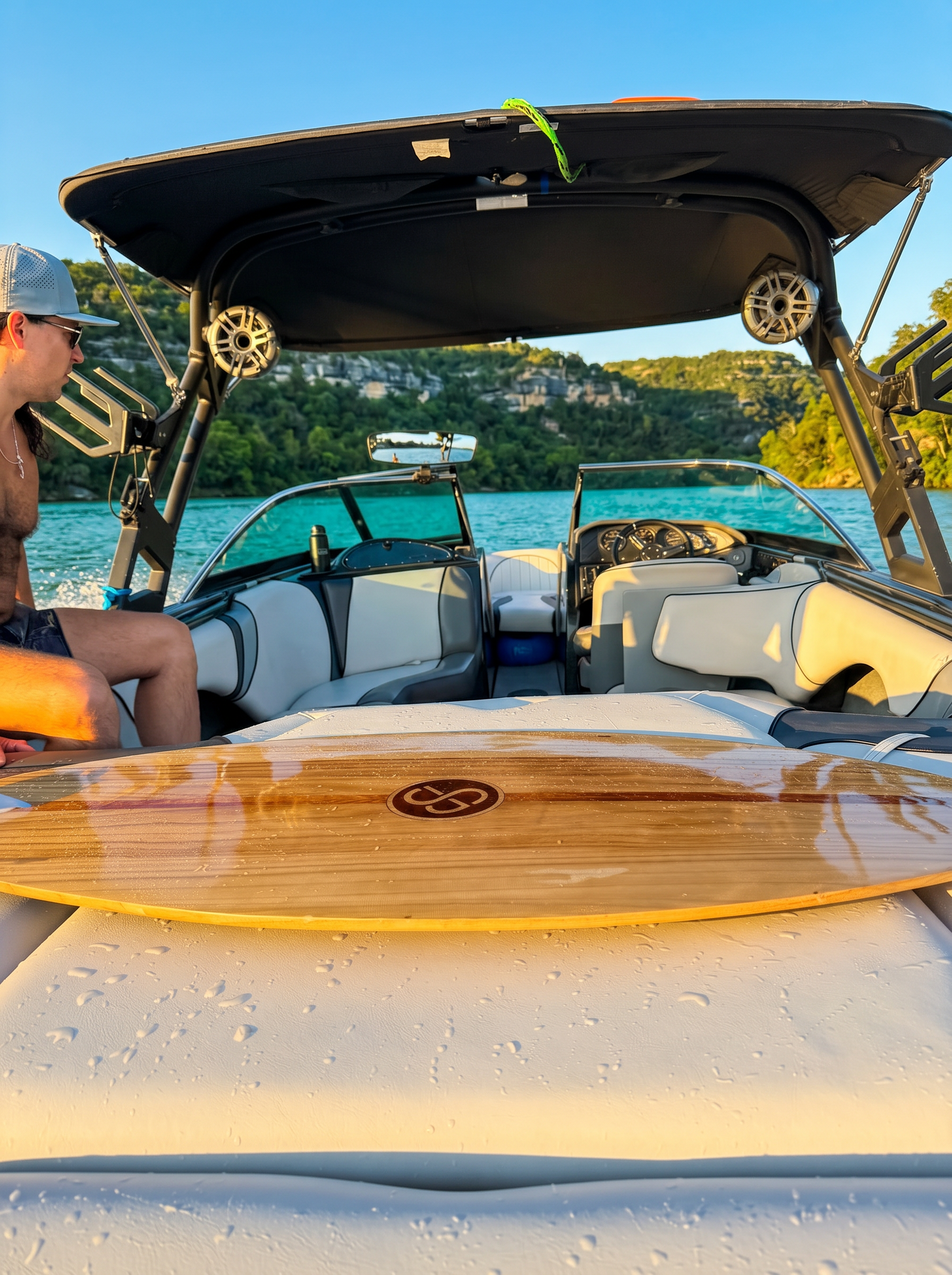
Plan for the heat, not just the sunshine
Plan a Lake Austin wakesurf charter around summer heat, with practical guidance on hydration, rider breaks, sun protection, and warning signs.
A comfortable summer wakesurf outing starts before anyone puts on a life jacket. Your departure time, expectations for riding, drink choices, and willingness to take breaks all affect how the day feels.
On a boat, it is easy to underestimate heat exposure. Moving air can make you feel cooler while sunlight still reaches your skin. Getting wet can be refreshing without fully resolving heat strain. And the excitement of learning a new skill can make a rider overlook thirst, fatigue, or an emerging headache.
The goal is not to turn a lake day into a rigid wellness schedule. It is to make room for water, rest, and honest communication so nobody feels pressured to keep surfing when they need a break.
For a private Lake Austin outing with Texas Wakesurf Charters, an expert captain and water sports instructor, fuel, top-tier water sports equipment, and a complimentary cooler with ice are included. Drinking water is not listed among those inclusions, so confirm beverage arrangements rather than assuming a stocked cooler will be waiting.
Choose a departure time with comfort in mind
There is no departure time that guarantees cool conditions during an Austin summer. Still, timing matters. If heat tolerance is a concern, ask about earlier availability and discuss the expected conditions before choosing your outing.
Earlier hours may offer less accumulated daytime heat, but humidity, direct sun, and the forecast still matter. A later departure can bring lower-angle sunlight without immediately cooler air. Do not treat either option as a substitute for hydration and sun protection.
Look beyond the temperature number
Before your charter, pay attention to:
- The hourly forecast for the actual hours you expect to be outside.
- Heat advisories or excessive heat warnings.
- Humidity and the heat index, not just air temperature.
- Cloud cover, remembering that clouds do not eliminate UV exposure.
- Thunderstorm potential and any guidance from the captain.
Heat index values generally describe shaded conditions. Direct sun can add to the heat stress a person experiences, so a forecast should be treated as context rather than a precise measurement of how everyone will feel aboard.
If a guest is especially sensitive to heat, bring that up before booking. An outing that sounds manageable indoors may feel very different after travel, time at the boarding location, and active riding.
Build the land portion into the plan
Heat exposure does not begin when the boat leaves. Walking from parking, carrying bags, and waiting outdoors all count.
Use the confirmed boarding instructions, organize your belongings before arrival, and avoid unnecessary waiting in an exposed location. Bring accessible drinking water rather than packing every beverage at the bottom of a bag.
The Lake Austin guide is a useful starting point for destination planning. Your booking confirmation and captain's instructions should govern the specific meeting location and arrival process.
Make hydration an actual plan
“Everyone should drink water” is easy to say and easy to forget. A better plan assigns responsibility for bringing drinking water, keeps it accessible, and connects drink breaks to natural pauses in the outing.
Do not assume the person organizing the birthday, family day, or bachelorette party has also arranged beverages. Confirm that detail in the group chat before departure.
Start before boarding
Arriving already thirsty after a rushed morning or a long drive creates an avoidable challenge. Drink normally before the outing and eat a familiar meal or snack that you tolerate well before physical activity.
There is no single fluid target that suits every guest. Body size, exertion, weather, health conditions, and medications can all affect needs. People with fluid restrictions or other relevant medical guidance should follow their clinician's advice rather than a generic boating recommendation.
Once aboard, take regular opportunities to drink. Do not make finishing a bottle a competition, and do not force large amounts of water quickly. Excessive water intake can also be dangerous.
Give drinks a place in the rider rotation
Useful hydration checkpoints include:
- Before gearing up for a turn.
- After returning to the boat and settling safely into a seat.
- During a pause in instruction or a change of activity.
- Whenever someone notices thirst or unusual fatigue.
These are reminders, not a replacement for drinking when needed. Children and guests caught up in the social atmosphere may benefit from a simple, friendly prompt.
For longer periods of sweating, an electrolyte drink or food may help replace some losses. It is not a shield against heat illness, and it does not make continued exertion safe when symptoms appear.
Separate cooler access from boat movement
The complimentary cooler with ice is useful, but ask where drinks should be stored and when it is safe to retrieve them. Do not climb around the boat while it is maneuvering just because someone wants a refill.
Use containers permitted by the charter operator, keep lids secure, and avoid leaving loose bottles where passengers step. A practical setup lets guests reach their own drinks without crowding the captain or obstructing walkways.
Use sun protection that works during an active lake day
Sun protection is more effective when it combines clothing, sunscreen, and breaks from direct exposure. Relying on a single morning application of sunscreen is a weak plan for an outing that includes water, sweat, and towel drying.
Apply sunscreen before the rush
Choose broad-spectrum, water-resistant sunscreen with SPF 30 or higher, and follow its label for application and reapplication. Water-resistant does not mean waterproof.
Apply it before boarding when possible, giving it the time specified on the label before water exposure. Reapply as directed, including after swimming, sweating, or towel drying. Commonly missed areas include ears, the tops of feet, the back of the neck, and exposed skin around clothing edges.
Do not spray sunscreen where it can blow into another passenger's face or coat the boat's walking surfaces. Ask the crew about the preferred place and method for reapplication. After applying sunscreen, remove excess from your palms before handling equipment, without neglecting protection on the backs of your hands.
Choose clothing for both shade and movement
A comfortable sun-protective shirt can reduce how much exposed skin needs repeated sunscreen attention. For riding, clothing should fit without loose pieces that can interfere with the handle, board, or life jacket.
Check that any shirt worn beneath a life jacket does not compromise the jacket's fit. Never loosen or remove required flotation to cool off while riding or waiting in the water.
Hats and sunglasses are useful while seated aboard, but secure loose items and follow the captain's guidance before entering the water. A favorite hat should not become a reason to reach overboard or interrupt a maneuver.
Ask about shade rather than assuming it
Boat shade varies with the vessel, sun angle, passenger seating, and operating conditions. Shade also does not necessarily cover every guest at once.
Review the vessel information and ask what shade arrangements are available for your outing. If shade is important for a child, older relative, or heat-sensitive guest, make that a booking conversation rather than an arrival-day discovery.
A shaded seat can reduce direct sun exposure, but it does not make a hot environment cool. Someone developing heat symptoms may need more than a different seat.
Let effort determine riding breaks
A beginner's turn can be physically demanding even if very little time is spent standing on the board. Repeated starts, holding position in the water, gripping the handle, and concentrating on instructions all take energy.
Experienced riders can overdo it too. Trying a new maneuver or extending a successful ride may mask fatigue until technique starts to deteriorate.
Avoid riding to an arbitrary target
Do not make success depend on staying out for a certain number of attempts or keeping pace with another guest. A useful turn ends while the rider can still listen, move deliberately, and communicate clearly.
Watch for changes such as:
- A grip that becomes harder to relax.
- Repeated mistakes after earlier controlled attempts.
- Difficulty following a familiar instruction.
- Unusual irritability or frustration.
- A rider who says they feel drained rather than simply challenged.
These observations do not diagnose heat illness. They are reasons to pause, check in, and let the instructor reassess rather than adding another attempt automatically.
Make returning to the boat feel normal
A good group culture makes “I need a break” an ordinary statement, not an apology. The organizer can set that tone before anyone rides.
Avoid chants for one more attempt when a rider is tired. Do not turn a birthday guest's progress into a performance obligation. A person who stops early has made a useful safety decision, not spoiled the outing.
Once back aboard, settle safely, take a drink as appropriate, and assess how you feel before volunteering for another turn. If discomfort persists, tell the captain. Rest should restore comfort; it should not simply serve as a countdown to more exertion.
Keep flexibility in the private-charter plan
A private booking allows your group to discuss priorities with the crew, but changes still depend on conditions and the captain's judgment. Ask whether the outing can include more resting or relaxed lake time if the group tires sooner than expected.
Explore the available experiences before booking so your expectations match the type of outing you choose. You do not need to make every available moment an active riding moment.
Recognize when discomfort is becoming a safety problem
Being warm and thirsty is not the same as having heat illness. However, early symptoms can be easy to dismiss on a lively boat. The safest approach is to speak up early and let the captain know about changes rather than waiting for certainty.
Symptoms that call for stopping activity
Possible signs of heat exhaustion include headache, dizziness, nausea, weakness, heavy sweating, and feeling faint. Muscle cramps can also occur during heat exposure and exertion.
If someone develops concerning symptoms:
- Stop their activity and alert the captain immediately.
- Move them out of direct sun and toward a cooler setting as safely as possible.
- Begin cooling with cool wet cloths and moving air if available.
- If they are fully alert, able to swallow, and not vomiting, offer small sips of cool water.
- Seek medical help if symptoms are significant, worsen, or do not improve promptly.
Do not send a symptomatic person back into the lake to cool off. Dizziness, weakness, or impaired judgment creates an additional risk in the water. The crew should direct safe movement and the response aboard.
Know the emergency warning signs
Confusion, slurred speech, collapse, seizures, or loss of consciousness during heat exposure can indicate heat stroke or another medical emergency. A person with heat stroke may still be sweating; dry skin is not required.
Call 911 immediately and alert the captain so they can coordinate the boat's location and emergency access. Begin cooling without delaying the emergency call, using available safe methods and following dispatcher instructions.
Do not give drinks to someone who is confused, unconscious, seizing, or unable to swallow safely. Do not leave them alone or assume they only need a nap.
This is general safety information, not a diagnosis or individualized medical advice. Similar symptoms can have different causes. When in doubt, get emergency guidance rather than trying to sort it out through group opinion.
Remember that not every headache is just the heat
Headache, dizziness, nausea, and confusion can also occur with carbon monoxide exposure around boats. Carbon monoxide is odorless, so the absence of an exhaust smell does not establish safety.
Follow the captain's directions about seating, swimming areas, boarding, and staying clear of exhaust outlets. Do not linger near an operating boat's exhaust or gather beneath swim platforms.
If several people feel unwell, or symptoms appear in association with exhaust exposure, tell the captain immediately. Move away from the suspected source to fresh air as safely directed and seek emergency help for suspected carbon monoxide poisoning.
The practical lesson is simple: do not label every symptom as dehydration and hand over a water bottle. Report what is happening, where the person was, and when symptoms started. That information helps the crew respond appropriately.
Set different expectations for different guests
A group can share a boat without sharing the same heat tolerance. Age, acclimatization, health conditions, sleep, recent illness, and medications can influence how an outing feels.
Children need active check-ins
A child who is excited about surfing may not volunteer that they feel tired or unwell. A responsible adult should check in directly, offer regular opportunities for drinks and rest, and watch for unusual behavior.
Use plain questions such as “Does your head hurt?” or “Do you feel dizzy?” rather than only asking whether they want another turn. Keep the appropriate life jacket on as required and follow the captain's directions throughout boarding, riding, and water time.
Heat-sensitive adults should plan ahead
Guests with a history of heat illness, relevant medical conditions, or medications that affect heat tolerance should ask their clinician about suitable precautions before the trip. Do not stop or alter prescribed medication for a lake day without medical advice.
You can tell the operator about a practical need without sharing private medical details with the whole group. For example, explain that a guest needs reliable opportunities to rest or may need to end activity early. Ask what can realistically be accommodated.
Keep alcohol separate from riding decisions
Alcohol can impair judgment, balance, and recognition of symptoms. It is not a hydration strategy, and a person who has been drinking should not participate in wakesurfing or swimming.
Confirm the operator's alcohol rules in advance and follow them. For party groups, make the activity plan clear before drinks are opened so nobody feels singled out later.
Give the organizer a simple pre-charter checklist
The most useful preparation is a short message that guests will actually read. Include the confirmed logistics and the expectations that affect comfort and safety.
A practical group message might cover:
- The confirmed meeting instructions and arrival time.
- Who is bringing drinking water and other permitted beverages.
- A reminder to apply sunscreen before arrival and bring it for reapplication.
- Appropriate sun-protective clothing and securely packed personal items.
- The expectation that anyone can skip a turn or ask for a break.
- A reminder to report dizziness, nausea, headache, or unusual fatigue immediately.
Keep the budget clear as well. Texas Wakesurf Charters includes the captain and water sports instructor, fuel, top-tier water sports equipment, and a complimentary cooler with ice. A mandatory 20% gratuity is due to the captain. Check current pricing rather than estimating a private-charter rate from another type of experience.
Public wake surf sessions are $100 per person with 5–8 people and are not private. If controlling your group's priorities is central to the plan, be clear that you are asking about a private charter, not a public session.
For booking terms, review the policies, and use the FAQ for general planning questions. Do not assume a heat advisory creates a particular cancellation or rescheduling entitlement; ask how the actual policy applies to your reservation.
Finish the day with energy left
A successful summer outing does not need to end with everyone exhausted. Protecting time for drinks, shade, and recovery can make the riding more enjoyable and leave the group feeling better afterward.
Keep paying attention after returning to shore. If someone remains dizzy, nauseated, weak, or otherwise unwell, do not send them off alone or have them drive. Seek medical advice or emergency care based on the symptoms, and treat confusion or collapse as an emergency.
The best heat-smart plan is flexible: prepare before departure, communicate early, and accept that conditions may change what feels comfortable. The lake will still be there when a rider decides to rest.
Ready to plan a summer outing around your group's comfort? Book a charter and discuss timing, shade, and activity priorities before your Lake Austin day.
Frequently asked questions
What is the best time of day for a summer wakesurf charter on Lake Austin?+
Ask about earlier availability if heat is a concern, but no departure time guarantees cool conditions. Consider the hourly forecast, humidity, heat advisories, and your guests' heat tolerance. Discuss expected conditions with the operator before choosing.
Is drinking water included with Texas Wakesurf Charters?+
A complimentary cooler with ice is included, but drinking water is not listed among the stated inclusions. Confirm beverage arrangements before departure and designate someone to bring water if needed.
Does getting in the lake prevent overheating?+
Getting wet may feel refreshing, but it does not guarantee that heat strain has resolved. A dizzy, weak, or otherwise symptomatic guest should not enter the water to cool off. Alert the captain and begin a safe cooling response.
What should we do if someone feels dizzy or nauseated on the boat?+
Stop their activity and alert the captain immediately. Move them toward a cooler setting safely and begin cooling. Offer small sips of water only if they are fully alert, able to swallow, and not vomiting. Confusion, collapse, seizures, or loss of consciousness require an immediate 911 call.
Can we take more breaks during a private wakesurf charter?+
Discuss rest and relaxed lake-time priorities when booking. A private charter lets your group communicate its preferences, but activity changes remain subject to conditions and the captain's judgment. No guest should feel pressured to continue riding when tired or unwell.
Ready to ride?