
What Life Jacket Do You Need for Wakesurfing? Approval, Fit, and Impact Vests Explained
October 15, 2026 · By Jordan Miller
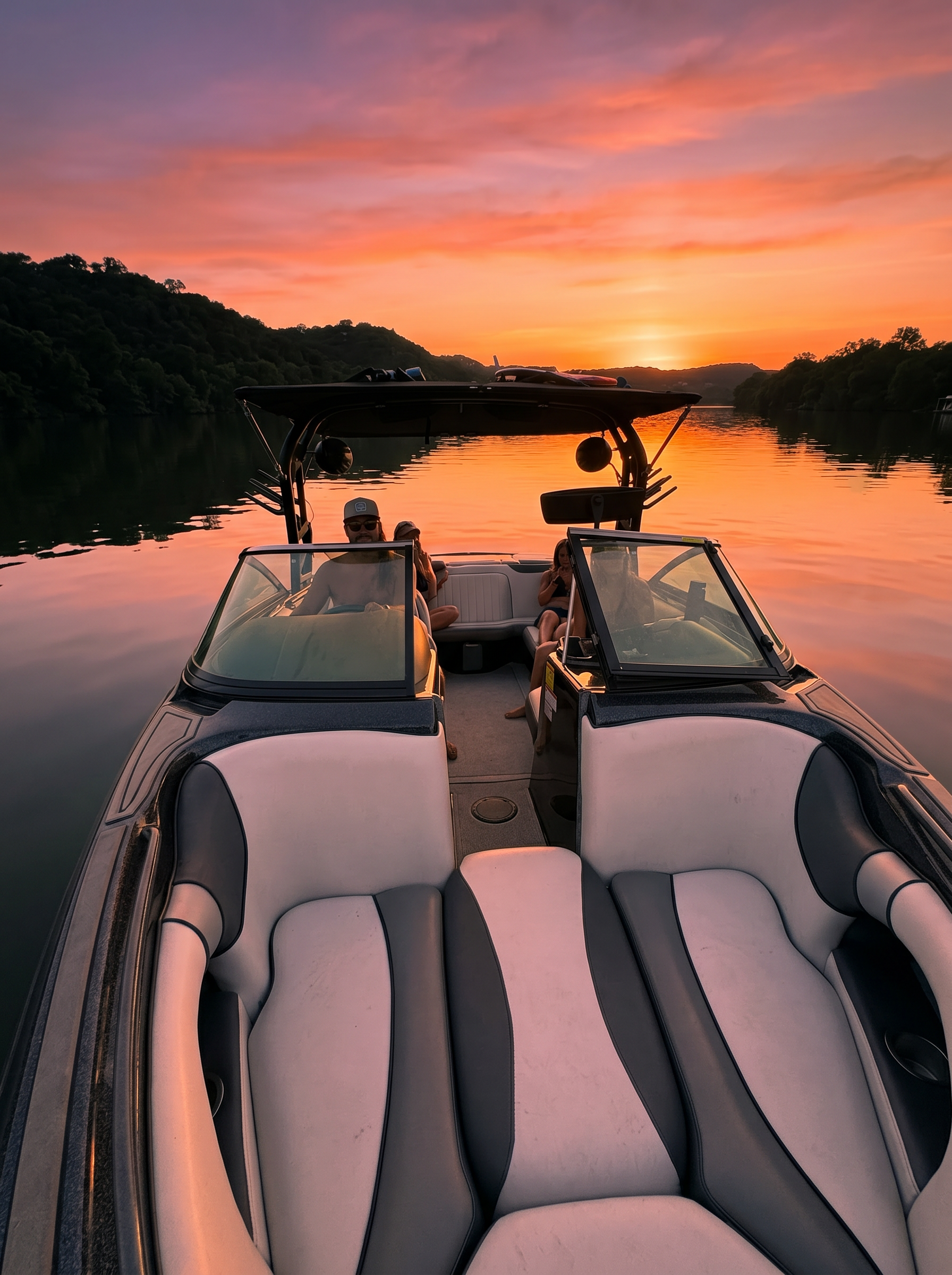
What life jacket should you wear for wakesurfing?
Wear a properly fitted, U.S. Coast Guard–approved wearable life jacket that is suitable for towed watersports. Check the actual approval label and activity restrictions rather than relying on the product name, appearance, or a retailer’s description.
For most recreational wakesurfers, an inherently buoyant watersports life jacket is the straightforward choice. It provides flotation without inflation or activation and should remain secure during starts, falls, and swimming.
A thin vest marketed for surfing or impact protection is not automatically an approved life jacket. Likewise, Coast Guard approval alone does not mean every approved device is suitable for wakesurfing: some have restrictions that exclude water skiing or similar activities.
This guide explains equipment selection and fit. It does not replace the manufacturer’s instructions, the captain’s safety briefing, or current boating regulations.
Life jackets, PFDs, and impact vests: what is the difference?
Life jacket and PFD
PFD stands for personal flotation device. It is a broad term that includes wearable life jackets and throwable flotation devices. A throwable cushion carried aboard a boat is not a substitute for the life jacket a wakesurfer wears.
An approved wearable life jacket has a label identifying its approval, size or weight range, and any conditions of use. Older products may use Type classifications; newer products may display performance levels and icons. Read the full label rather than treating a single number as a universal suitability rating.
Some watersports life jackets are designed primarily for conscious wearers. Do not assume that every approved jacket will turn an unconscious person face-up.
Impact vest
An impact vest is designed primarily to cushion impacts. Some provide buoyancy, but many are not Coast Guard approved as life jackets.
The product category can be confusing because approved watersports life jackets may also include impact-protective padding. The decisive question is not whether the vest feels padded or floats: it is whether the particular model carries the appropriate approval and permits the intended activity.
Inherently buoyant versus inflatable
An inherently buoyant jacket uses materials such as foam to provide flotation continuously. An inflatable device depends on a mechanism, manual action, or both to inflate.
Many inflatable PFDs are not approved for water skiing or other towed activities. Do not select an inflatable belt pack or vest for wakesurfing unless its specific approval and instructions expressly allow that use. An activity-appropriate foam life jacket avoids that uncertainty.
| Equipment | Appropriate choice for wakesurfing? | What to verify |
|---|---|---|
| Approved foam watersports life jacket | Generally, yes | Correct size, secure fit, and no conflicting activity restriction |
| Non-approved impact vest | Not a substitute for an approved life jacket | Look for an actual approval label, not flotation claims |
| Inflatable belt pack or vest | Generally not the appropriate choice | Many labels prohibit towed watersports |
| Throwable cushion or ring | No, not as the rider’s wearable protection | Intended as additional rescue equipment |
| Damaged or poorly fitting approved jacket | No | Approval does not compensate for damage or incorrect fit |
Step 1: read the label before choosing a size
Find the permanent label inside the jacket. If it is missing or illegible, choose another jacket whose approval and instructions can be verified.
Check these items:
- Approval: Confirm that the device is U.S. Coast Guard approved, rather than merely described as a buoyancy aid.
- Intended activity: Read restrictions and required-use conditions. Do not use a device that excludes water skiing or similar towed activities.
- Size range: Check the manufacturer’s chest measurements, weight range, or both.
- Wearer limitations: Look for age, weight, or other restrictions.
- Closure instructions: Identify every zipper, buckle, and strap required for proper use.
A jacket’s marketing description does not override its label. “Competition,” “surf,” “professional,” or “high performance” does not establish approval or suitability.
For boat and equipment context before a charter, review the vessel information. Ask about available jacket sizes if someone in your group needs a particularly small or large fit.
Step 2: choose by measurements, not clothing size
Life jacket sizing is not standardized like a single universal clothing chart. A medium in one model may fit differently from a medium in another.
Use the manufacturer’s measurement guidance as the starting point, then test the jacket on the actual wearer. Adult jackets commonly rely on chest measurements; children’s jackets commonly include weight ranges. Follow whichever criteria appear on that particular model.
Do not size up a child’s jacket to allow room to grow. Excess space can allow the jacket to ride over the chin or head. Do not put a smaller rider in an adult jacket simply because its straps can be tightened.
Body shape matters, too. If a jacket pinches the ribs but remains loose around the shoulders, a different cut may work better than changing only the size.
Step 3: perform a dry-land fit check
Fit the life jacket before the rider approaches the swim platform. Start with a jacket in serviceable condition and have another adult or the instructor help check it.
Secure all closures
Put on the jacket according to its instructions. Close the zipper, fasten every required buckle, and adjust the straps evenly.
The jacket should feel snug without restricting normal breathing. Tuck away loose strap ends where the design allows, keeping them away from handles, ropes, and other equipment.
Test for upward movement
With the wearer standing and raising their arms, have a helper gently lift at the jacket’s shoulders. The jacket should not slide substantially upward toward the ears or over the chin.
This is a screening check, not proof that every aspect of the fit is correct. If the jacket rides up, readjust it and repeat. If adjustment does not solve the problem, use another size or model.
Check wakesurfing movements
Ask the rider to:
- Reach forward as though holding the rope handle.
- Bend their knees into a compact starting position.
- Rotate their shoulders comfortably.
- Raise both arms without the jacket shifting excessively.
- Take several normal, deep breaths.
A suitable jacket must balance retention with mobility. A jacket that is painfully tight is not correctly fitted simply because it cannot move.
| Fit problem | Likely issue | Practical response |
|---|---|---|
| Jacket rises toward the ears | Too loose or an unsuitable cut | Readjust; change size or model if needed |
| Rider cannot breathe comfortably | Too tight or poorly shaped for the wearer | Recheck measurements and try another fit |
| Buckles barely connect | Size or adjustment is unsuitable | Do not force the closure; select another jacket |
| Jacket shifts during arm movements | Excess room or uneven adjustment | Refit and repeat the movement check |
| Child’s chin slips inside the opening | Unsafe fit | Replace with an appropriately sized model |
Step 4: check flotation in controlled conditions
For an unfamiliar jacket, a supervised water check can reveal fit problems that are less obvious on land. Follow the captain’s directions and the manufacturer’s testing guidance.
Use controlled conditions with immediate assistance available. Never test a jacket by jumping into unfamiliar water, moving near a running propeller, or deliberately submerging yourself to see what happens.
Once safely in the water, confirm that:
- The jacket stays in place rather than pushing up around the face.
- The wearer can breathe, orient themselves, and move comfortably.
- Closures stay fastened.
- The wearer can follow directions for returning to the boat.
If the jacket shifts or causes difficulty, stop and correct the problem before towing begins. Do not assume it will settle into place once the rider starts surfing.
What about children and Texas life jacket rules?
Texas boating rules include requirements for carrying approved flotation equipment and for children to wear life jackets in specified circumstances. The rules applying to passengers aboard a boat should not be treated as a complete checklist for a person being towed.
Check current Texas Parks and Wildlife Department requirements and any applicable local restrictions before operating your own boat. Requirements can depend on the vessel, the wearer, and the activity.
For a wakesurf outing, use the simpler safety standard: every rider wears a properly fitted, activity-appropriate approved life jacket, regardless of swimming ability or age. A captain may also establish wear requirements beyond the legal minimum.
For children, confirm the labeled weight range, fit, and any required retention straps. Never assume that flotation equipment makes a child ready to wakesurf. The captain or instructor should assess whether the activity is appropriate, and an adult must provide active supervision.
What a life jacket cannot protect you from
A life jacket is one layer of protection, not permission to disregard boat procedures.
It does not eliminate risks from propellers, rope entanglement, collisions, carbon monoxide, or unsafe boat configurations. Wakesurf only behind a boat specifically designed and approved for the activity, following its manufacturer’s instructions.
Keep ropes clear of the body, stay away from exhaust outlets, and follow the captain’s directions for entering, exiting, and returning to the boat. A good swimmer still needs flotation: a fall can cause disorientation, injury, or unexpected fatigue.
On Lake Austin, traffic, wakes from other boats, and changing weather can affect a session. The Lake Austin guide provides planning context, but the captain’s real-time assessment determines whether riding should continue.
Inspect and care for the jacket after use
Before each session, inspect the foam, fabric, stitching, straps, zipper, and buckles. Remove the jacket from service if a required closure fails, straps are torn, or flotation material is damaged.
After use:
- Rinse and clean as directed by the manufacturer.
- Allow the jacket to dry thoroughly in a ventilated location.
- Avoid excessive heat and prolonged sunlight during storage.
- Do not store heavy objects on top of it.
- Do not cut, alter, or remove flotation material or required straps.
Replace a jacket when its condition or fit is no longer dependable. There is no universal replacement interval that overrides the manufacturer’s guidance and the jacket’s actual condition.
Planning a properly equipped Lake Austin session
Texas Wakesurf Charters offers captained private wakesurf and lake-day charters on Lake Austin in Austin, Texas. Charters include an expert captain and water sports instructor, fuel, top-tier water sports equipment, and a complimentary cooler with ice.
Discuss sizing needs before your outing, especially for children or anyone whose fit falls outside common adult ranges. Review pricing and policies when planning; a mandatory 20% gratuity is due to the captain.
Ready to arrange a session? Book a charter and share your group’s equipment and sizing needs in advance.
Frequently asked questions
Can I wear an impact vest for wakesurfing?+
Only treat it as a life jacket if that specific model is U.S. Coast Guard approved and its label permits the activity. Many impact vests provide padding or some buoyancy but are not approved life jackets.
How tight should a wakesurf life jacket fit?+
It should fit snugly with every required closure secured, without restricting normal breathing. It should not slide substantially toward your ears or over your chin when a helper gently lifts at the shoulders.
Can I wakesurf in an inflatable life jacket?+
Many inflatable devices prohibit water skiing or similar towed activities. Do not use one unless its specific approval and instructions expressly allow the activity. An approved, activity-appropriate foam jacket is generally the straightforward choice.
Do strong swimmers need a life jacket for wakesurfing?+
Yes. Every rider should wear a properly fitted, activity-appropriate approved life jacket. Swimming ability does not prevent disorientation, injury, or fatigue after a fall.
Can a child wear a small adult life jacket?+
Do not select a jacket based only on whether its straps tighten. The child must fall within the manufacturer's labeled size or weight range, and the jacket must pass fit checks without riding over the chin or head.
Will every approved life jacket turn an unconscious rider face-up?+
No. Some approved watersports jackets are designed primarily for conscious wearers and may not turn an unconscious person face-up. Read the performance information and limitations on the actual label.
Ready to ride?