
What Rope Do You Need for Wakesurfing? Handle, Length, and Setup Explained
October 17, 2026 · By Jordan Miller
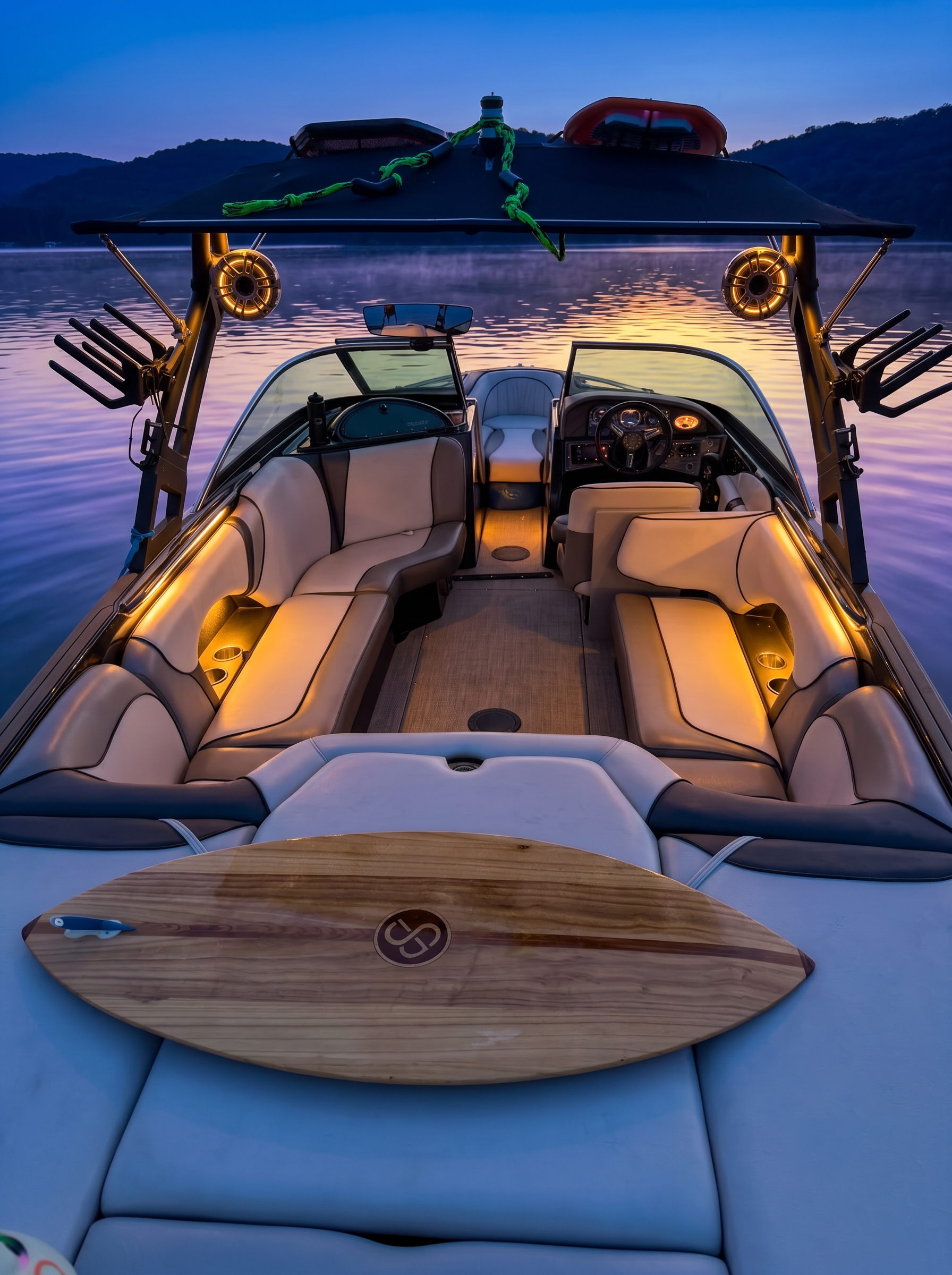
What kind of rope do you need for wakesurfing?
Use a purpose-built wakesurf rope and handle system that is compatible with your boat’s approved towing attachment. Look for a manageable grip, flotation, an appropriate load rating, and adjustable sections that let the captain position the rider near the surfable part of the wave.
A wakesurf rope is a starting and positioning tool, not something the rider should use to compensate indefinitely for an unsuitable wave or poor board position. It also requires active management: loose line can entangle a rider or reach propulsion equipment.
The right choice depends on the boat, wave, rider, and manufacturer’s instructions, not simply the shortest rope available.
How is a wakesurf rope different from a wakeboard rope?
Wakeboarding generally takes place farther behind the boat, with the rider maintaining a loaded connection to the tow rope. Wakesurfing takes place much closer to a suitable boat, and the rider may eventually ride the wave without the rope.
That difference affects useful rope length, handle design, and line management.
| Feature | Wakesurf rope | Wakeboard rope |
|---|---|---|
| Intended use | Getting up and positioning on a surf wave | Maintaining a towing connection while wakeboarding |
| Working length | Shorter, often with removable sections | Typically longer, often with adjustment sections |
| Grip options | Compact handles, padded grips, or other surf-specific designs | Usually a wider handle intended for wakeboarding |
| Flotation | Often includes floating handles or rope sections; verify the product | Varies by product |
| Main setup concern | Keeping the rider appropriately positioned while limiting loose line | Setting the riding distance for wakeboarding |
A shortened wakeboard rope is not automatically an equivalent substitute. Handle dimensions, adjustment options, flotation, and the remaining line still matter. A purpose-built wakesurf system reduces the need for improvised modifications.
Neither rope type makes an unsuitable boat safe for wakesurfing. Confirm that the boat is intended and configured for this activity before considering rope setup.
What should you look for when buying a wakesurf rope?
A grip the rider can release easily
Choose a grip that is comfortable to hold with wet hands without requiring an excessively tight squeeze. Check the handle covering, end connections, and any padding for rough or damaged areas.
Wakesurf handles are often smaller than wakeboard handles, but no handle is entanglement-proof. Never put a hand, arm, foot, or head through the handle opening. Never wrap the rope around a wrist or another body part.
Handle-free surf ropes also exist. They are not automatically safer or easier for beginners; selection should reflect the product’s intended use and the instructor’s teaching method.
Flotation and visibility
Floating components help the crew locate and retrieve the rope. A visible color can also make it easier to track against changing water reflections.
Check whether the handle, the line, or both are designed to float. Flotation does not guarantee that every part stays on the surface, particularly under tension or in disturbed water.
Purpose-made length adjustment
Removable sections let the captain change the working length without asking the rider to gather excess rope. Look for clearly identified attachment loops and instructions explaining how the sections connect.
Do not create adjustment points with arbitrary knots. Knots can reduce line strength, damage some rope constructions, and introduce snag points. Use only connections permitted by the manufacturer.
Appropriate construction and rating
Select a product explicitly intended for wakesurfing and follow its rider-weight, load, and use limitations. Rope diameter alone does not establish strength or suitability.
Some products incorporate limited stretch or a shock-absorbing section. Those features do not replace smooth boat operation. Follow the product’s precautions, especially around recoil and damaged elastic components.
How long should a wakesurf rope be?
The useful length is the length that places the rider in an appropriate starting and riding position for that boat’s wave. There is no single setting that works for every hull, tow point, ballast arrangement, or rider.
Two terms help clarify the setup:
- Working length: The deployed connection between the boat’s towing attachment and the rider’s grip.
- Pocket: The portion of the wave with enough usable push to support the rider and board without continuous rope assistance.
Advertised product length may describe the complete assembly or a particular combination of sections. Check whether the handle section is included when comparing products.
A rope that is too long may leave a beginner well behind the useful wave. One that is too short can position the rider unnecessarily close to the boat. Neither problem should be solved by wrapping line around the hand or holding a bundle of slack.
The captain should set the length conservatively, observe the rider’s position, and make adjustments between attempts. The rider should not change connections while being towed.
Step-by-step: How to set up the rope
1. Confirm the boat and tow point
Use only a boat suitable for wakesurfing and a towing attachment approved for that purpose by the boat or equipment manufacturer.
Do not assume that a cleat, rail, tower component, or lifting eye is a suitable tow point. If a tower is involved, verify both its intended use and the required attachment method.
For a charter, leave attachment decisions to the captain. The vessel information can help you understand the boat before your visit, but it does not replace the onboard briefing.
2. Inspect the complete system
Lay out the rope where the crew can see its entire length. Check the handle, section connections, attachment loop, and any floats or elastic components.
Remove twists and tangles before deployment. If a connection is unclear, stop and consult the product instructions rather than guessing.
3. Set a provisional working length
Select the manufacturer-approved sections appropriate to the boat’s surf setup. Secure unused equipment aboard so it cannot fall into the water or obstruct movement.
Do not leave an improvised tail of excess line hanging from the rider’s end. An adjustable rope should be shortened through its intended section system.
4. Establish crew responsibilities
The captain operates the boat. A designated observer watches the rider and communicates with the captain. A designated crew member may also manage retrieval, provided that doing so does not compromise observation.
Before starting, agree on signals for readiness, stopping, and discomfort. Explain who will retrieve the rope and what the rider should do when instructed to release it.
5. Deploy the rope clear of hazards
With propulsion disengaged and the captain controlling the procedure, place the rope so it is clear of the rider’s limbs, board, and propulsion equipment.
Nobody should start the tow while the line is looped around a person or tangled under the board. Take up slack smoothly under the captain’s direction; do not use an abrupt acceleration to snap the rope tight.
6. Evaluate before adjusting
After an attempt, assess the rider’s position and the amount of line they had to manage. Stop the tow before changing rope sections or attachment points.
Change one setup variable at a time where practical. Simultaneously changing rope length, boat speed, and wave settings makes it harder to identify what helped.
How should riders and crew manage slack?
Slack means the line is no longer carrying meaningful towing tension. It can occur when the board moves toward the boat, the wave begins supporting the rider, or the rider changes position.
A little slack is not necessarily a problem. Loose loops around the rider are.
Use these rules throughout the session:
- Never coil spare rope around a hand or forearm.
- Never step through a floating loop.
- Do not let the rope drag between the rider’s legs.
- Do not attempt to catch a moving handle after losing it.
- Release the grip rather than struggling against an entanglement risk.
- Stop the activity if the rope’s location becomes uncertain.
The crew should explain the handoff or release procedure in advance. Avoid throwing a handle toward passengers or across occupied seating. Once released, the line should be retrieved promptly and kept clear of propulsion equipment.
If rope approaches or enters propulsion machinery, stop operation. Do not reach toward a propeller or attempt to clear a fouled line while the engine is running. Follow the boat manufacturer’s shutdown and recovery procedure; some situations require professional assistance.
What rope problems should you check first?
| Observation | Possible explanation | Practical response |
|---|---|---|
| Rider holds a bundle of loose rope | Working length may be unsuitable | Stop and adjust using the intended sections |
| Rider remains far behind the useful wave | Rope setting, technique, or wave setup may be contributing | Have the instructor evaluate before shortening |
| Handle twists awkwardly | Tangled line, twisted connections, or grip issue | Stop, lay out the system, and inspect |
| Rope repeatedly crosses the board | Deployment or rider positioning needs attention | Reset before the next start |
| Starts feel sharply jerky | Abrupt slack take-up, boat operation, or equipment behavior | Review starting procedure and inspect equipment |
| Line is difficult to locate | Poor visibility or inadequate flotation | Stop until located; consider a more visible suitable system |
These observations are clues, not diagnoses. A rider struggling to stay with the wave may need a technique correction or a different wave setup rather than a different rope.
When should you replace a wakesurf rope?
Inspect it before each session and after any unusual loading, snagging, or contact with a sharp surface.
Remove the system from service if you find cuts, significant abrasion, exposed core material, damaged stitching or splices, cracked handle components, or compromised attachment loops. Follow the manufacturer’s criteria for wear and replacement. If structural damage is uncertain, do not keep using it while you investigate.
After use, clean it according to the care instructions, let it dry, and store it away from prolonged sunlight, heat, fuel, and chemicals. Avoid trapping a wet rope beneath heavy gear or in a persistently damp compartment.
There is no universal replacement calendar. Condition, exposure, construction, and manufacturer guidance matter more than appearance alone.
What does this mean for a Lake Austin charter?
On a captained outing, guests should not need to choose the towing attachment or adjust rope sections themselves. Ask the instructor about grip, signals, and line handling before entering the water.
Texas Wakesurf Charters provides captained private wakesurf and lake-day charters on Lake Austin in Austin, Texas. Included are an expert captain and water sports instructor, fuel, top-tier water sports equipment, and a complimentary cooler with ice. A mandatory 20% gratuity is due to the captain.
Review pricing and the Lake Austin guide when planning. If you want help learning with the equipment set up and supervised, book a charter.
Frequently asked questions
Can you use a wakeboard rope for wakesurfing?+
A wakeboard rope is not the preferred substitute. Its working length, handle dimensions, flotation, and adjustment system may be poorly suited to wakesurfing. Choose a purpose-built wakesurf rope and follow the boat and rope manufacturers’ instructions.
How long should a wakesurf rope be?+
It should position the rider appropriately for the particular boat and wave without requiring them to gather excess line. The captain should select manufacturer-approved sections and adjust the length between attempts, not while the rider is being towed.
Should a wakesurf rope float?+
Floating components are useful because they help the crew locate and retrieve the system. Verify whether the handle, rope, or both float. Even a floating system can become submerged or tangled, so it still requires active supervision.
Can you tie knots in a wakesurf rope to shorten it?+
Do not add arbitrary knots. They can reduce strength and introduce snag points. Shorten the system using its intended removable sections or another adjustment method explicitly permitted by the manufacturer.
What should you do if a wakesurf rope gets near the propeller?+
Stop operation and tell the captain immediately. Do not reach toward propulsion equipment or attempt to remove a fouled line with the engine running. Follow the boat manufacturer’s shutdown and recovery procedure, and seek professional assistance when needed.
Ready to ride?